31 Dagli's
20-Sep-2025
Architecture
31 Dagli's is a residence that layers the dreams, hopes, and sensibilities of both the architect and its inhabitants. The project aims to create a harmonious balance among spatial planning, façade articulation, and thoughtful material play while accommodating the lifestyle of a close-knit joint family.
The house is designed for a family of seven whose warmth and humility shaped the architectural approach. The intention was to create spaces that reflect each member's individuality while maintaining a cohesive spatial experience throughout the house.
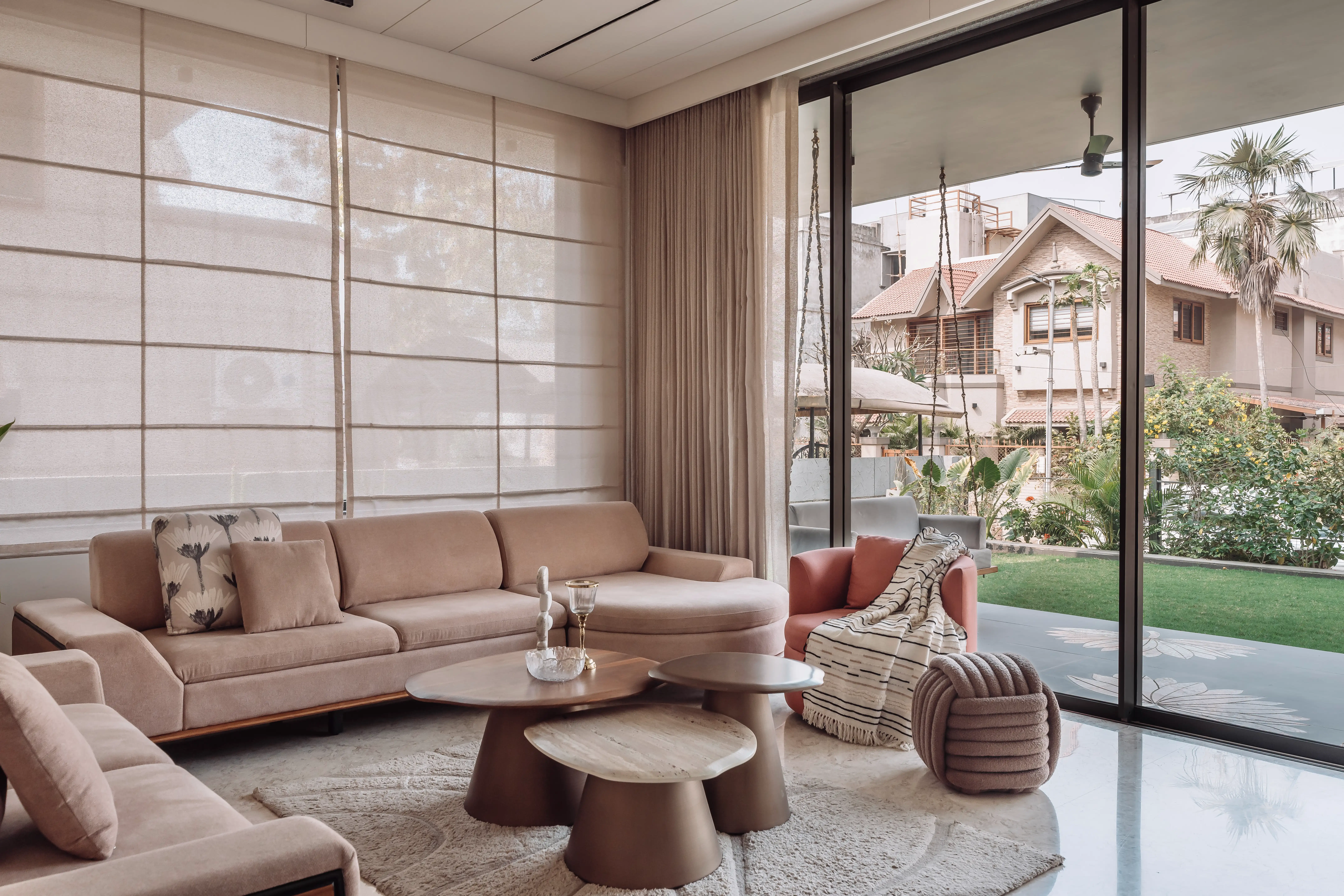
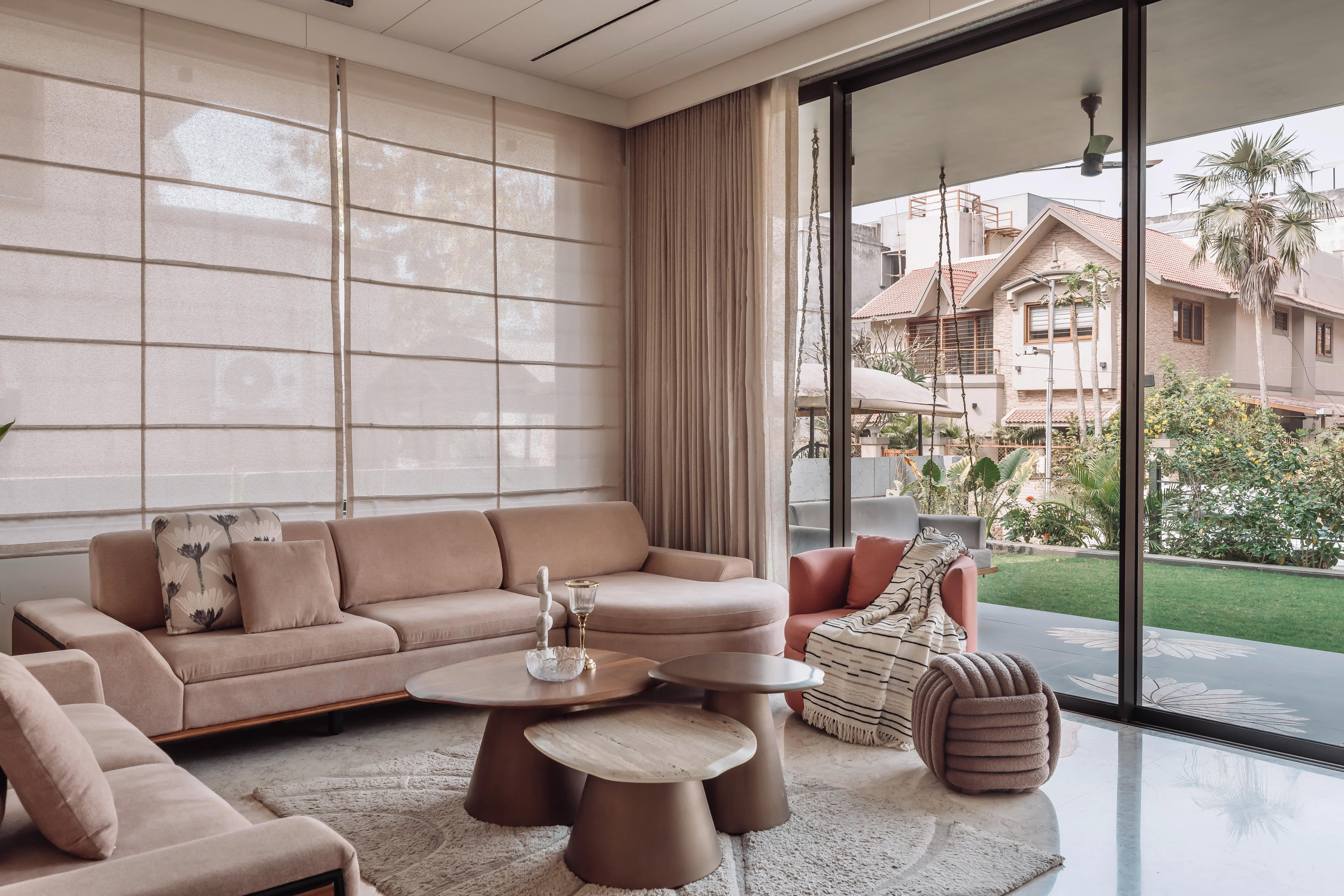
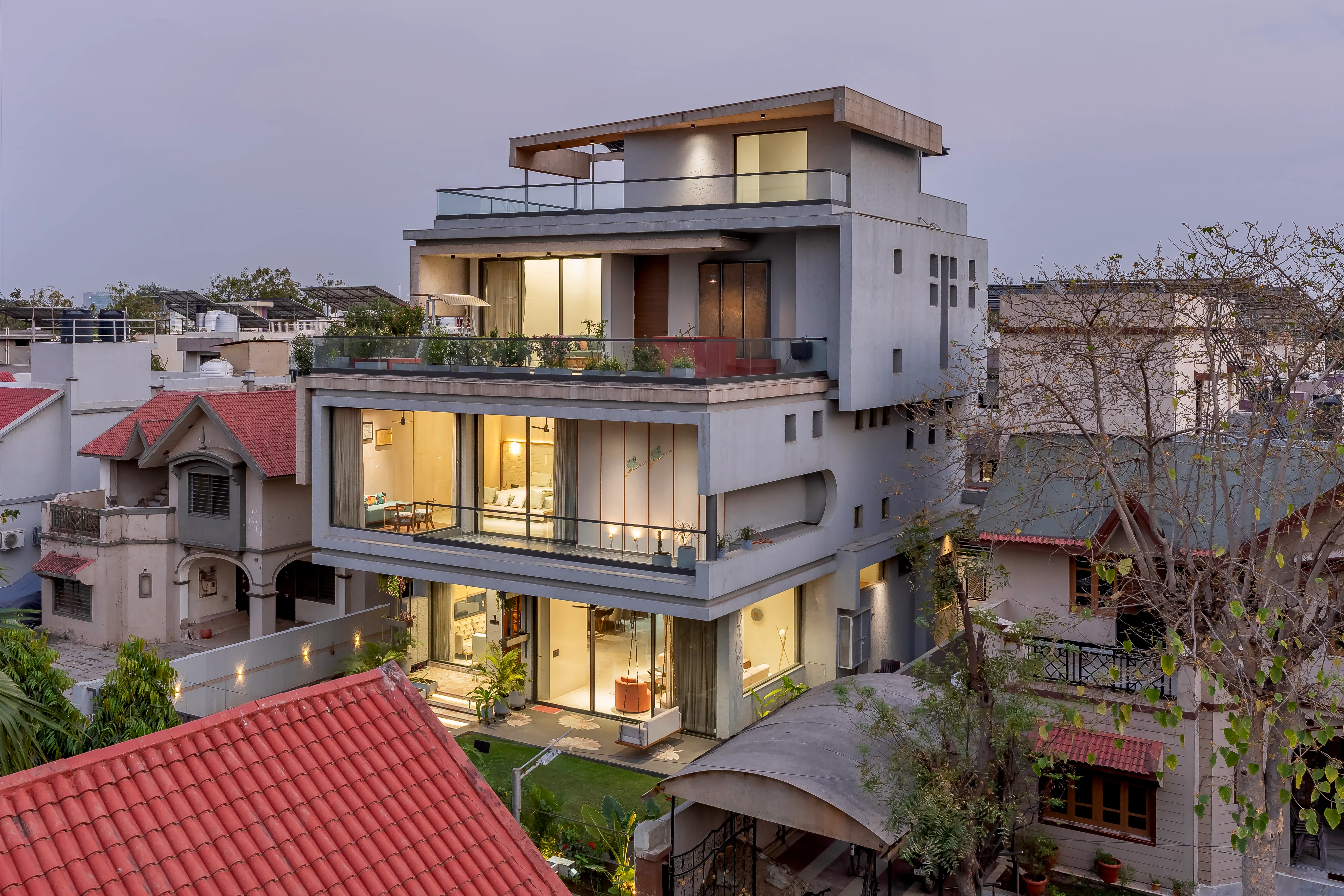
The plot is north-facing and surrounded by neighboring bungalows on three sides within a residential society located along the busy Ambli Road in Ahmedabad. Responding to the site orientation became a key design driver. The primary living spaces are open toward the north-facing garden, allowing abundant natural light throughout the day without exposure to harsh sunlight. This orientation enables the family to maintain a strong visual and spatial connection with the outdoors.
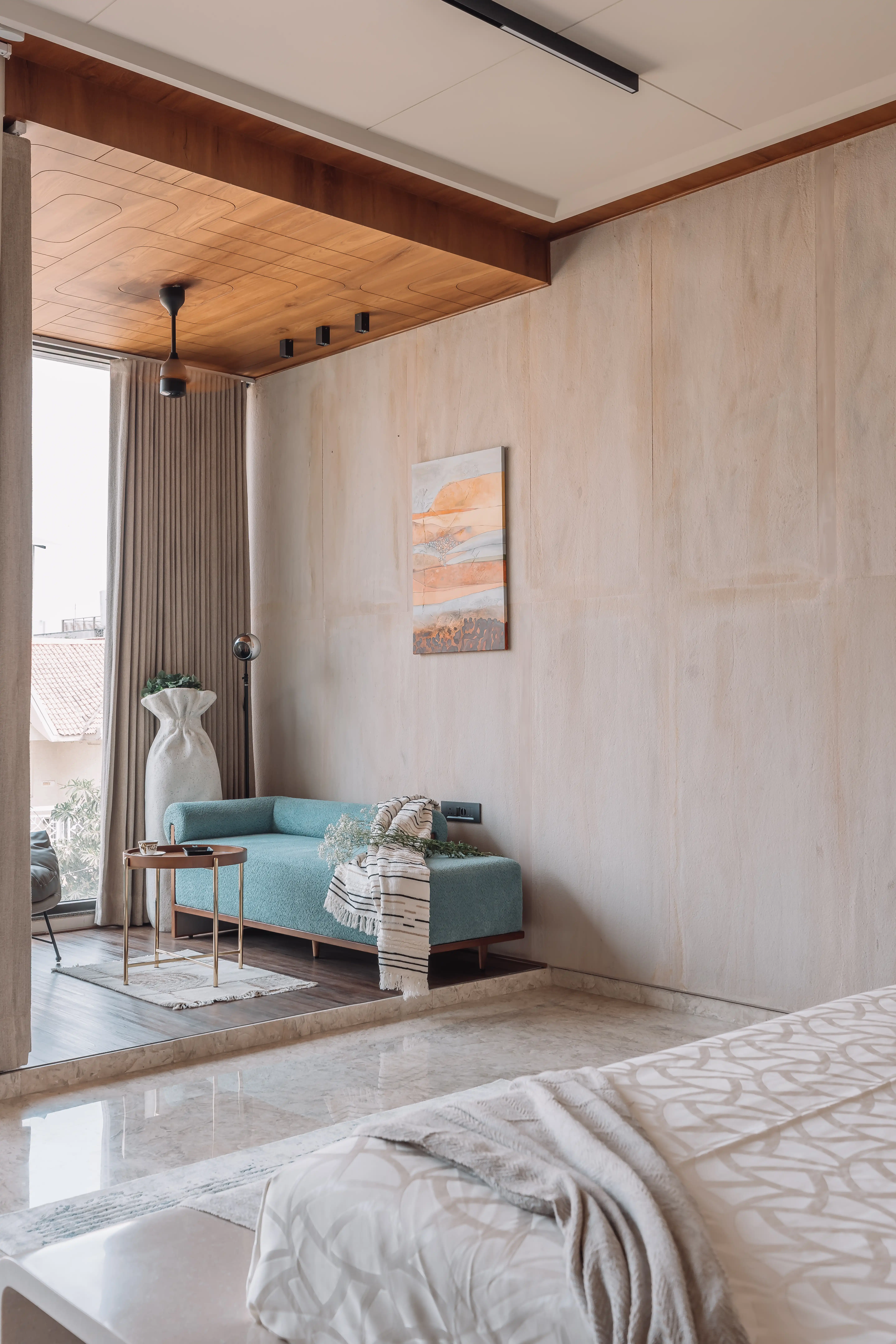
Bedrooms are located along the north and east sides of the plot to ensure thermal comfort. The dressing areas and toilets are strategically placed on the west side, acting as a buffer against the intense western sun and protecting the main living spaces from heat gain. Traditional jharokha-inspired seating is integrated along the south side of the bedrooms, offering flexible ventilation while introducing a cultural architectural element.
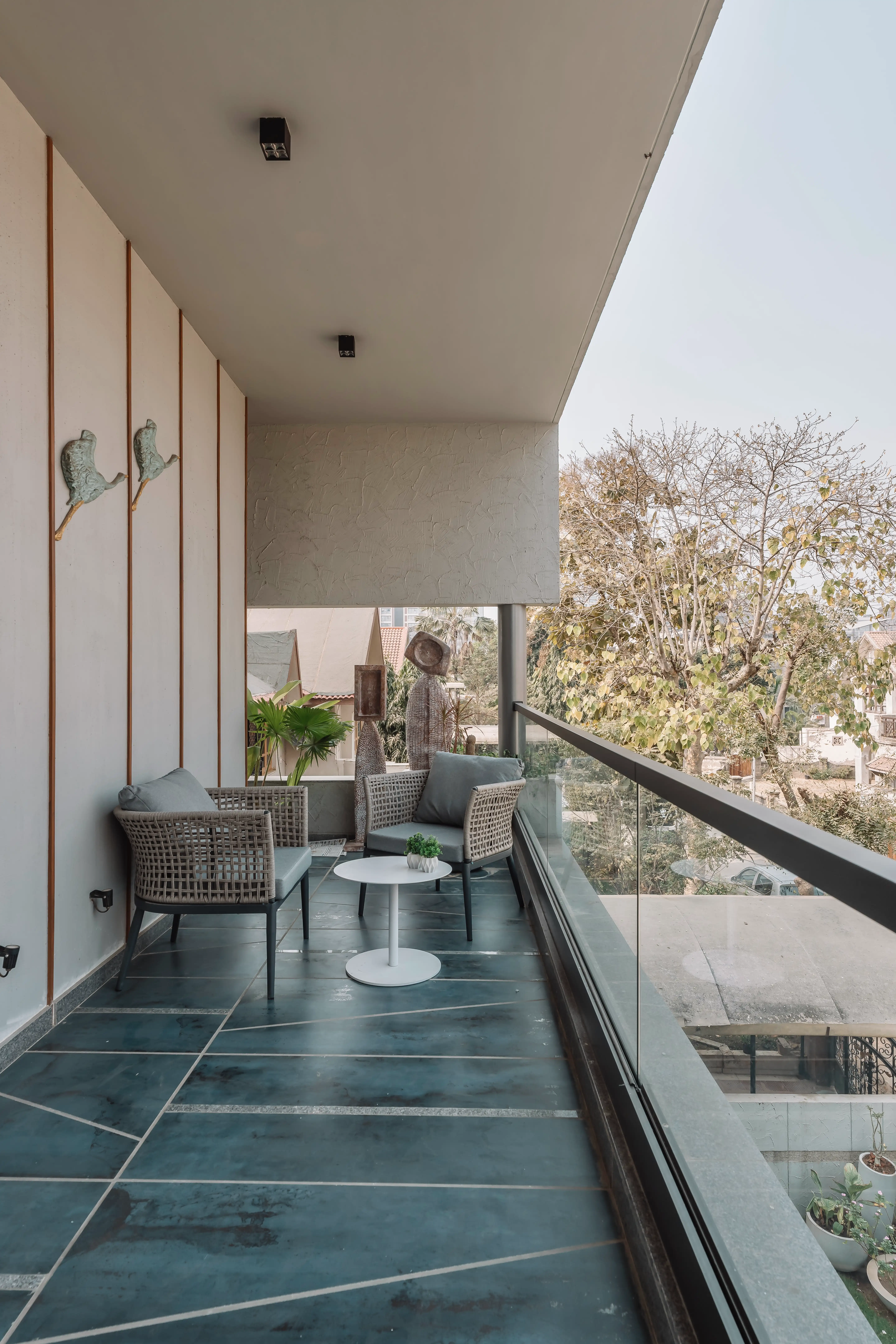
The front room features a large jharokha-style bay space designed as a raised wooden deck seating area. With its full-height glass façade and adjoining balcony, the space becomes an extension of the interior, encouraging interaction between the house and the surrounding landscape.
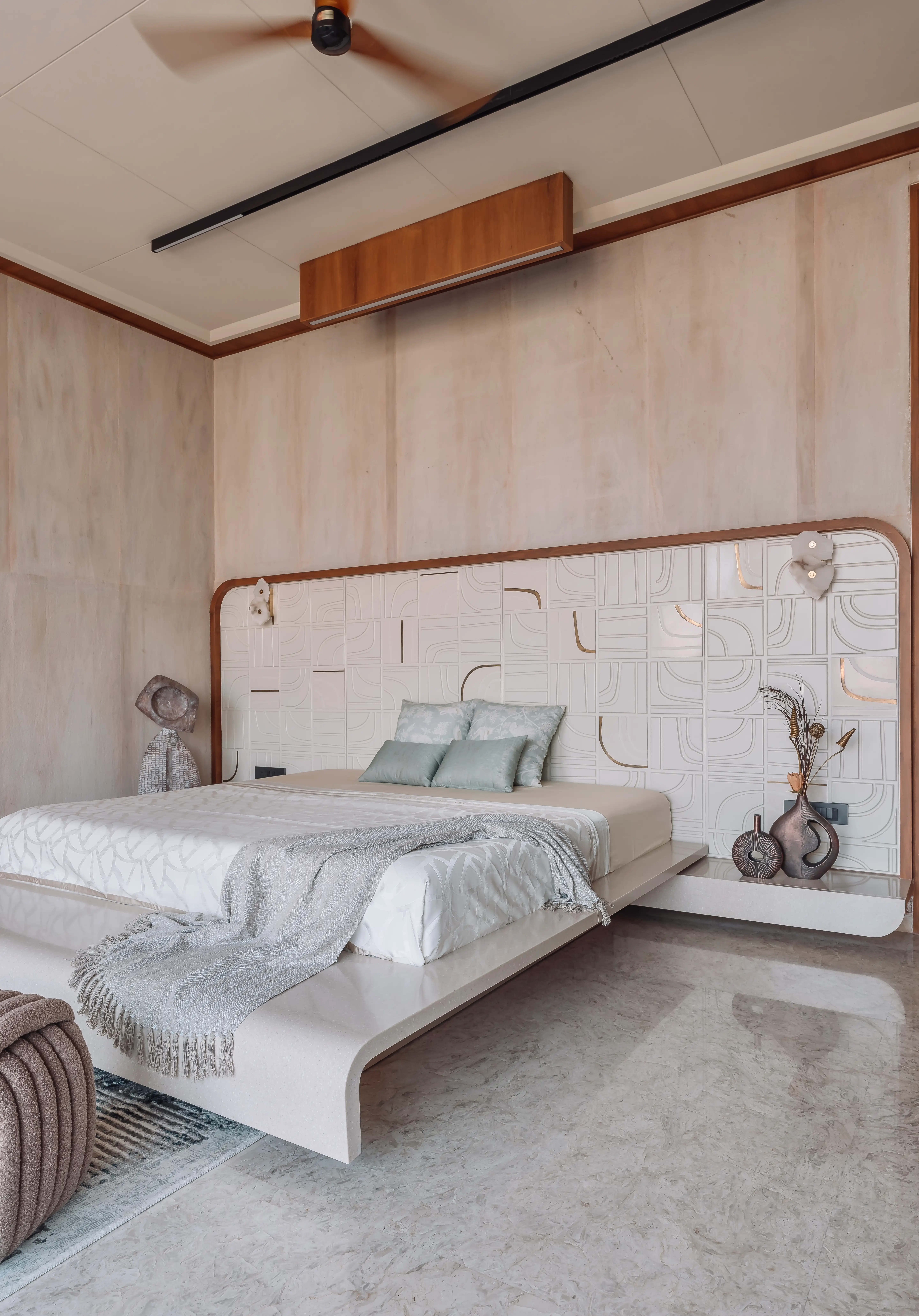
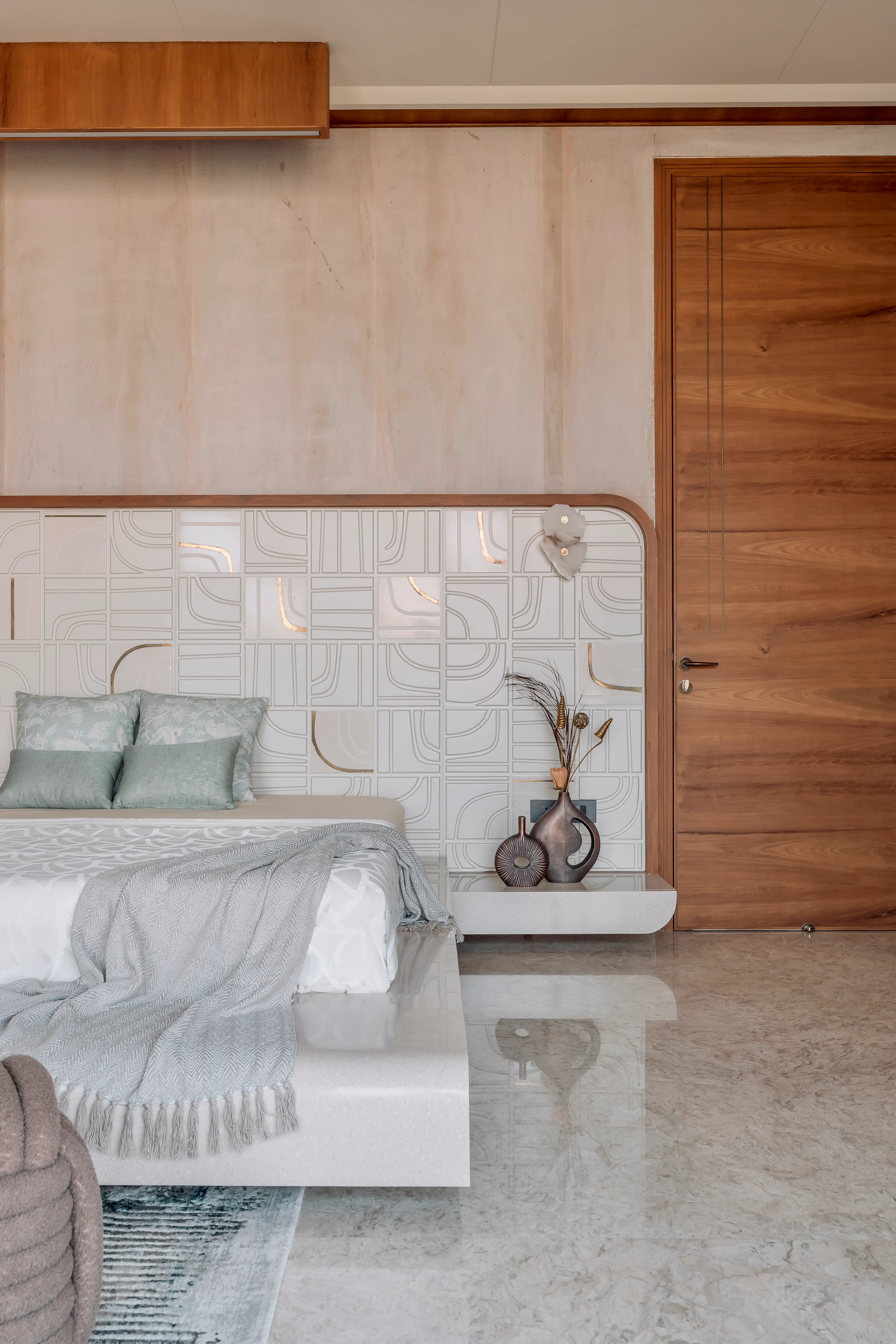
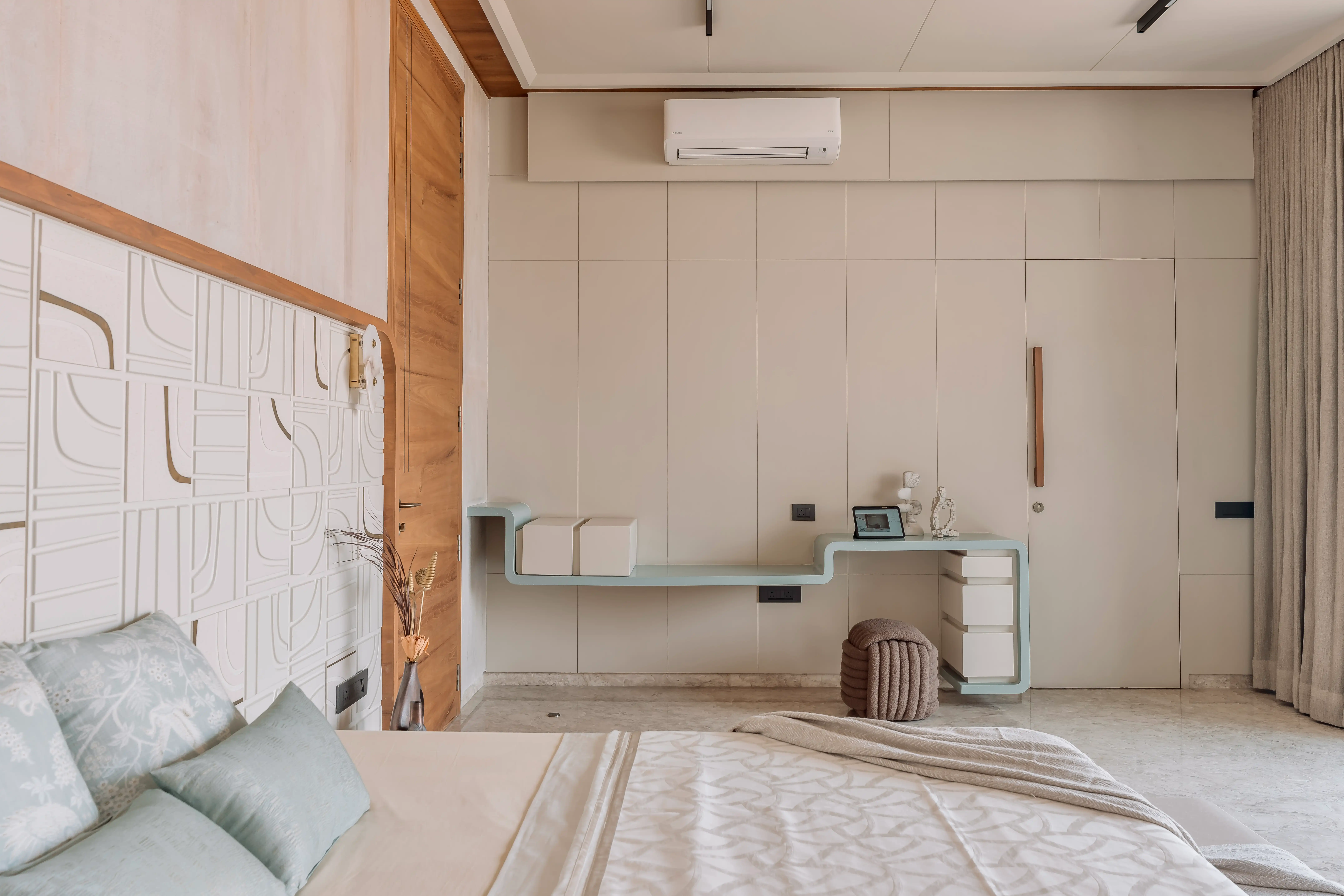
The interiors of the house are carefully tailored to reflect the personality of each occupant. The master bedroom features sandstone cladding that forms a subtle backdrop for a Corian and brass inlay headboard, complemented by sea-green accents and a walk-in wardrobe with patterned shutters.
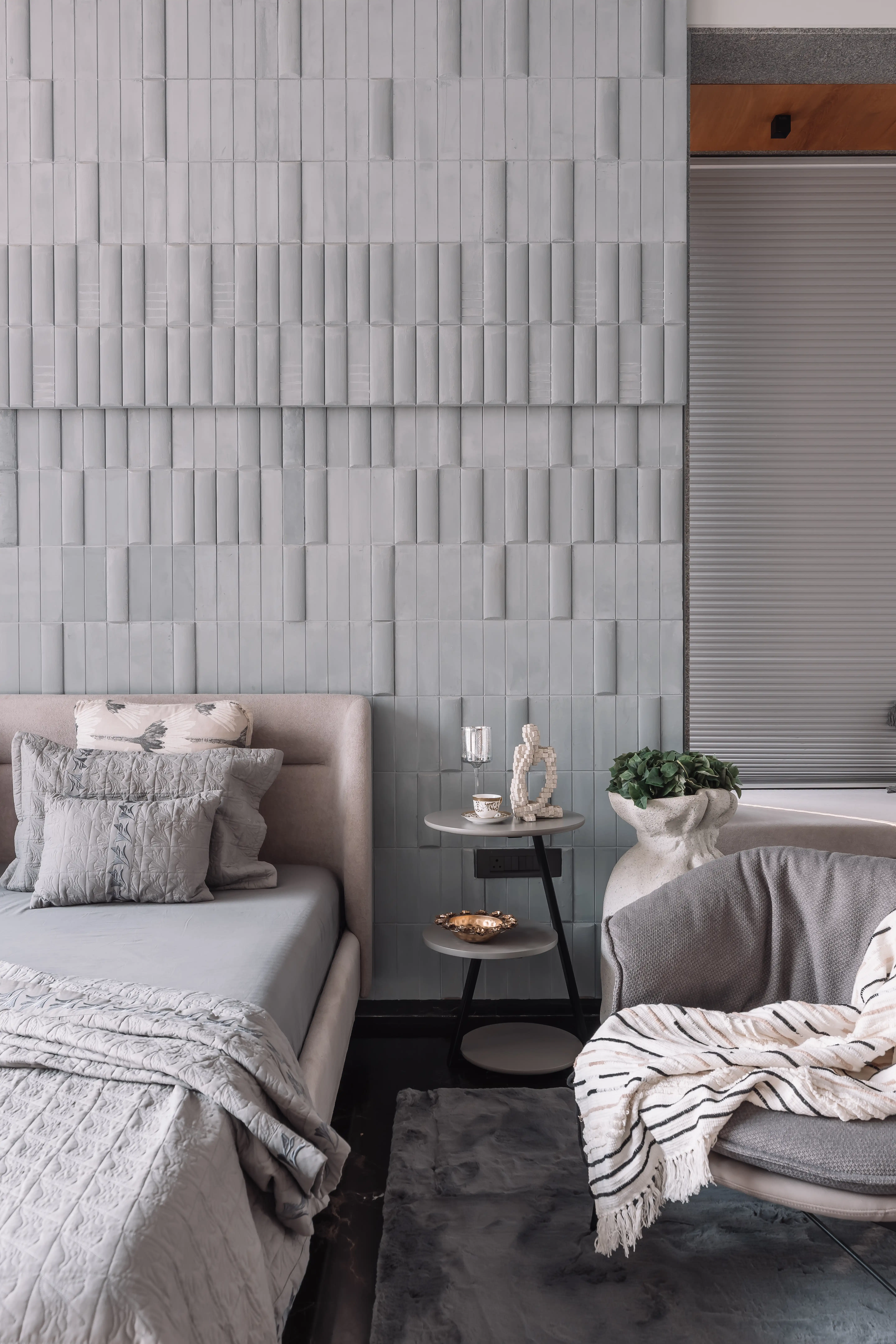
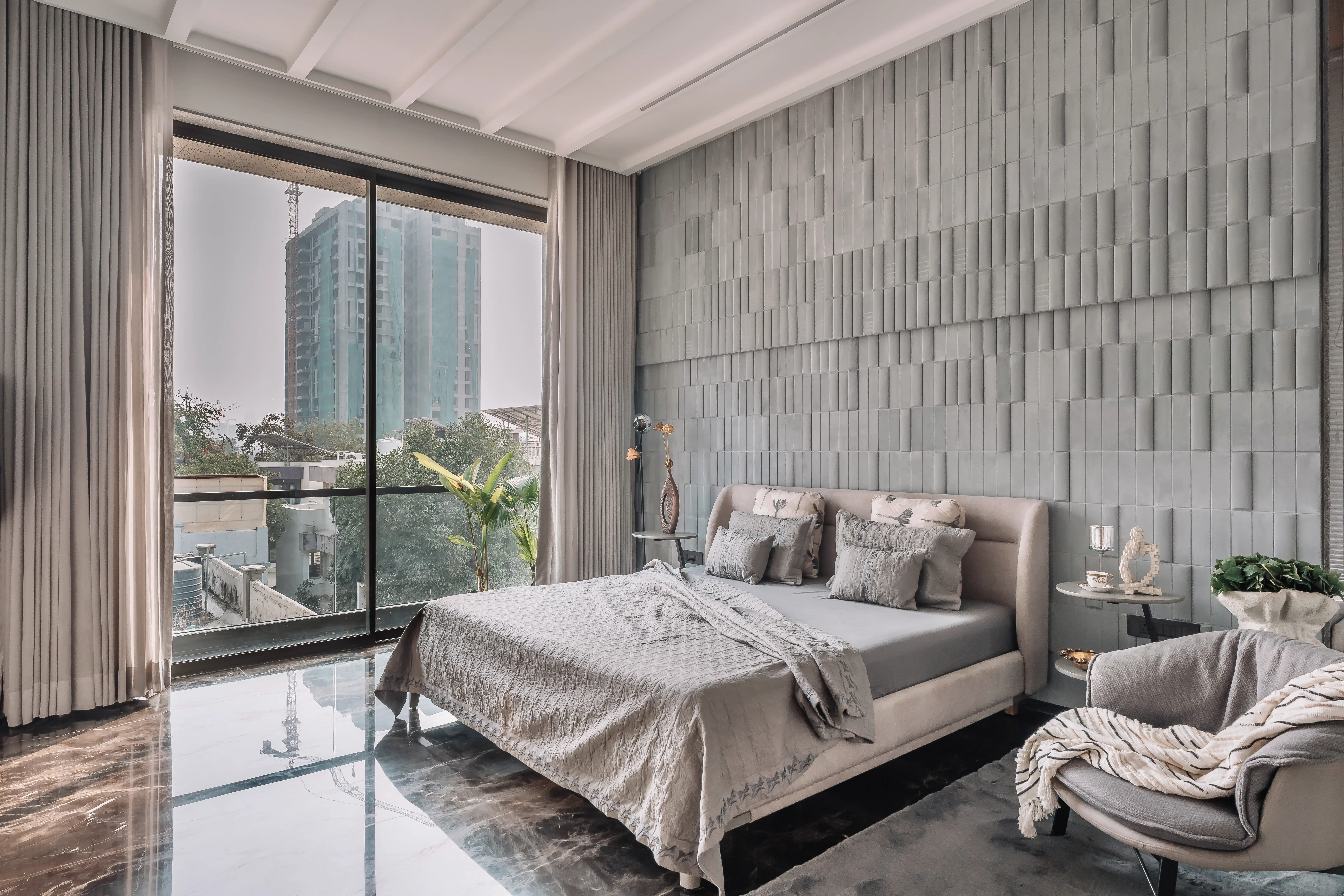
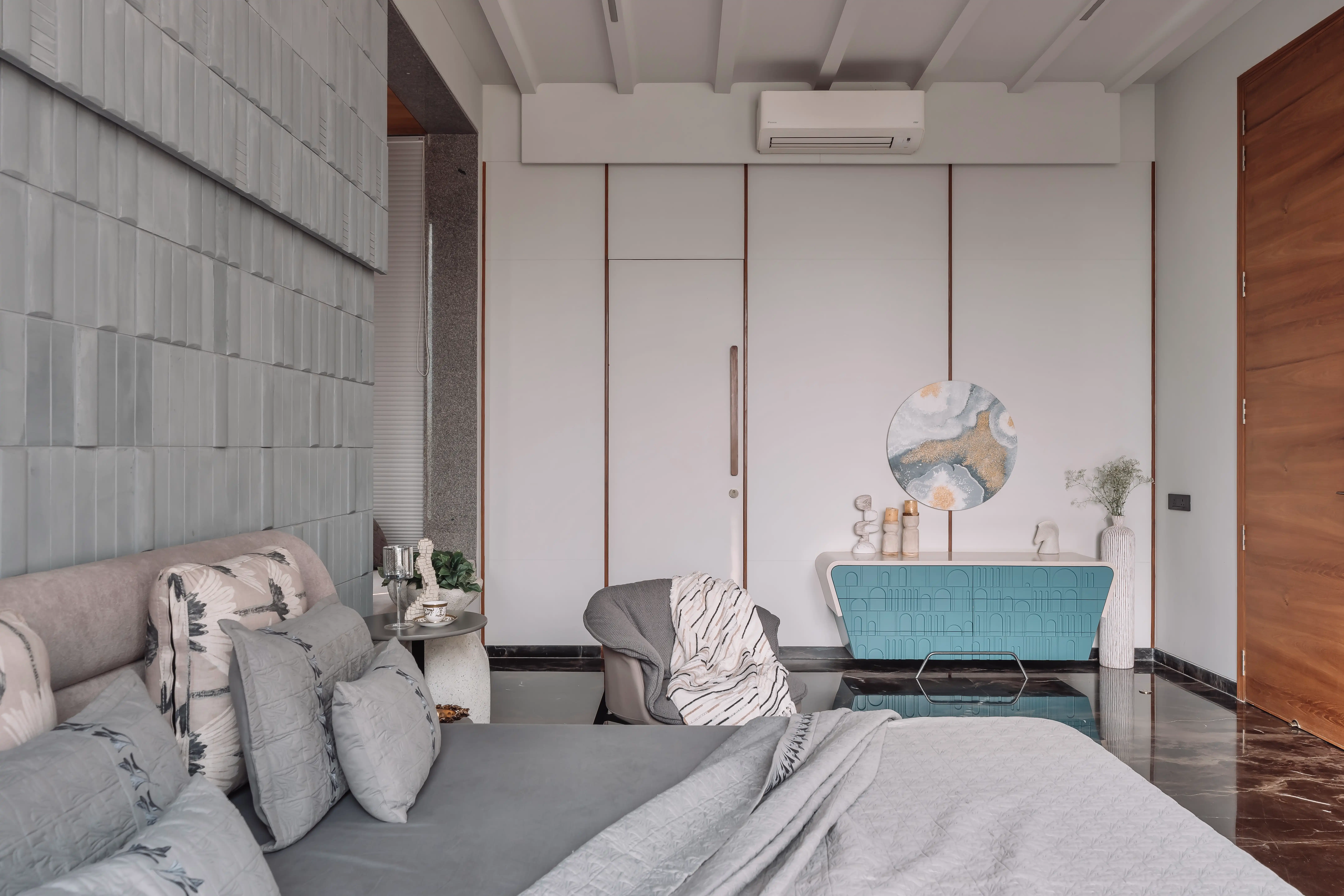
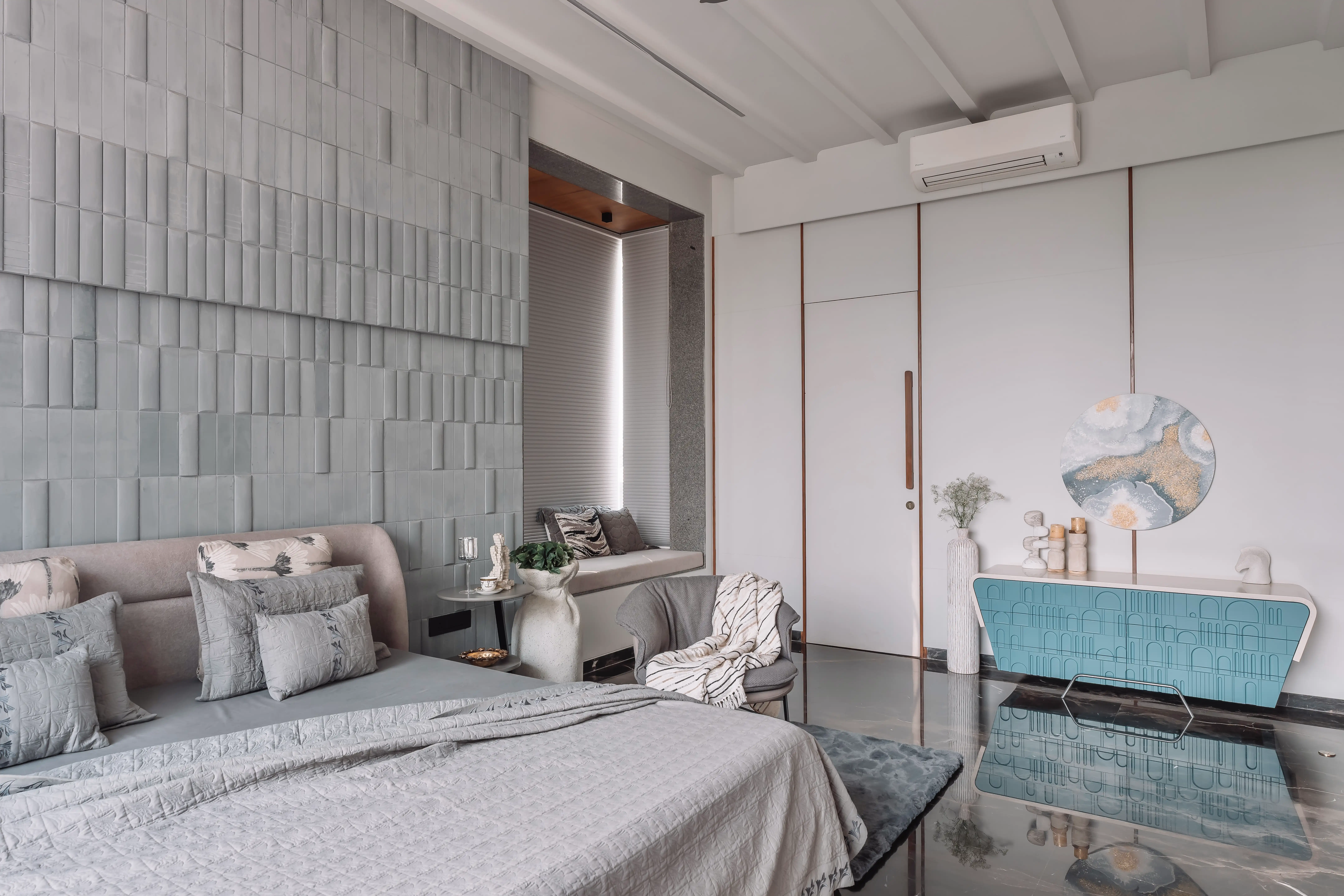
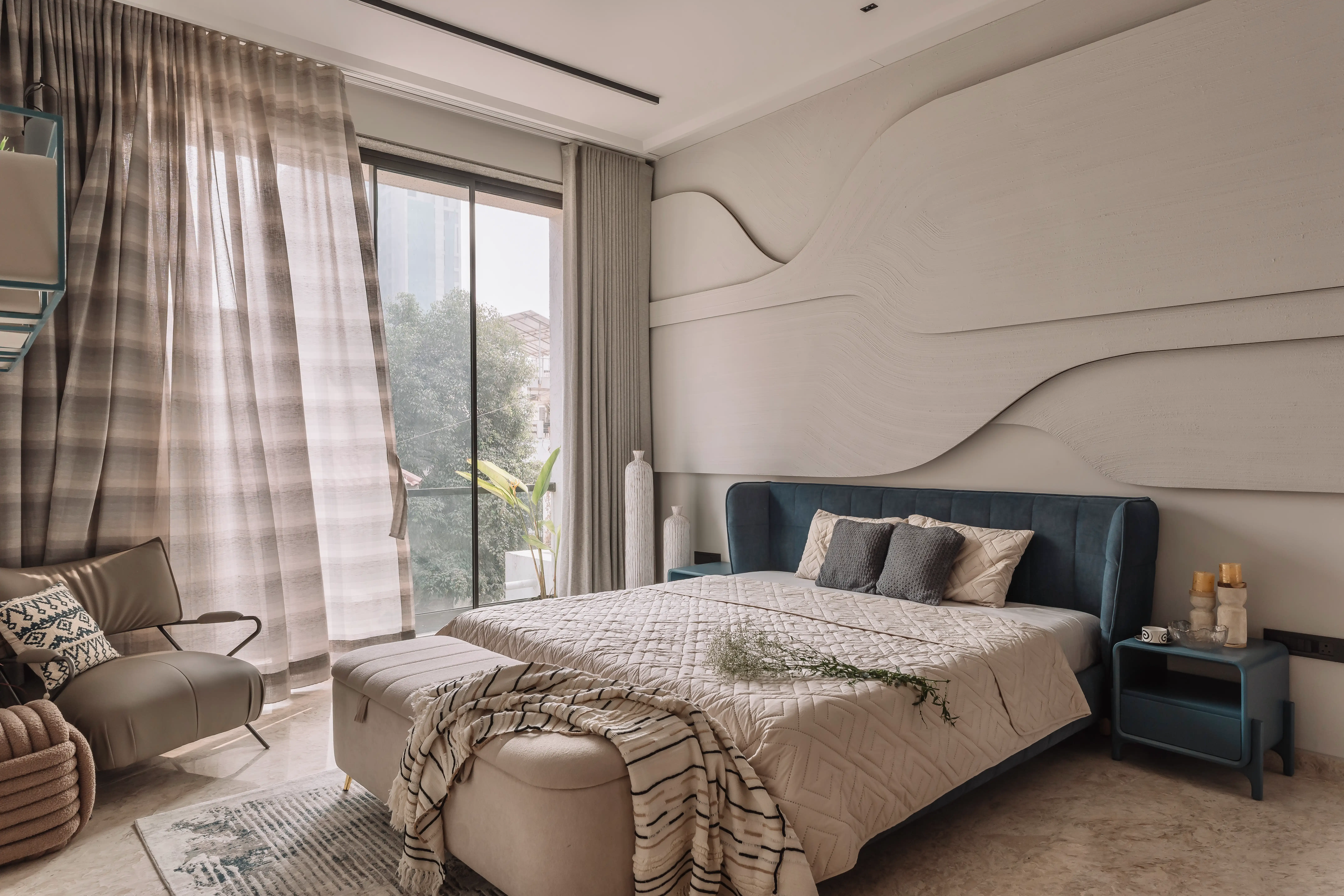
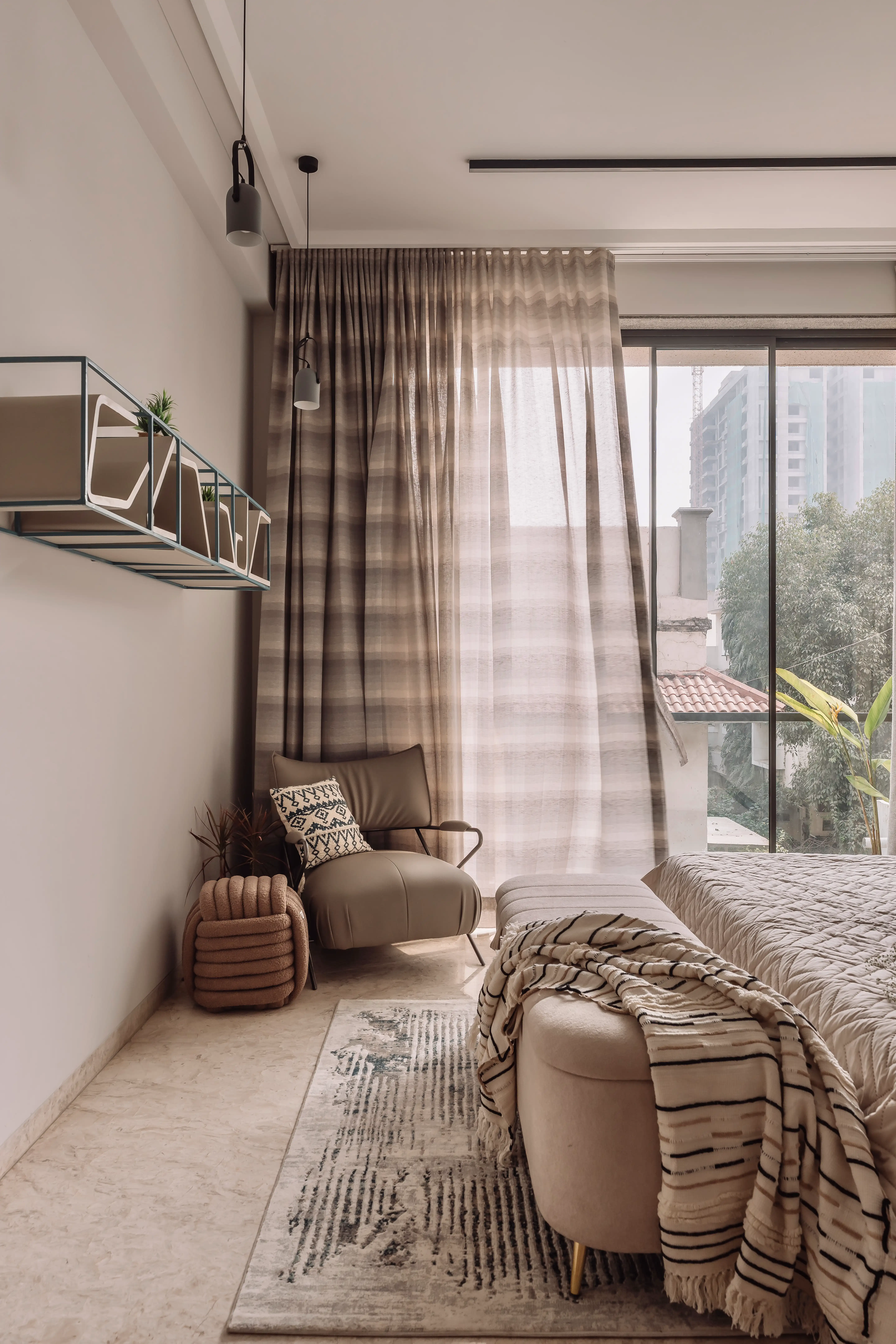
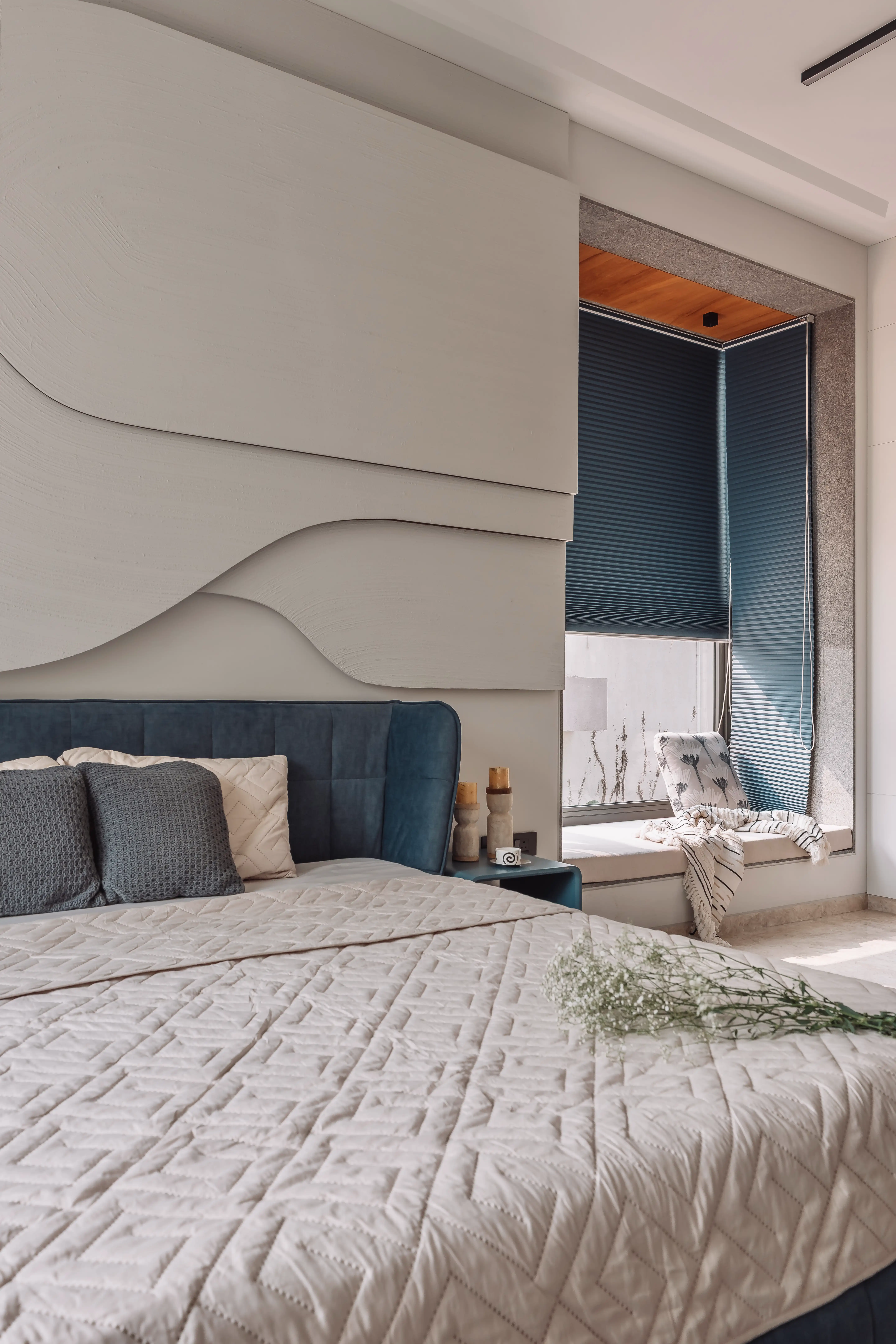
The bedrooms for the younger generation are designed as personalized environments. One room uses a grey-toned palette with CNC-textured wall paneling, black flooring, and bold blue furniture elements, creating a strong and contemporary character. The other introduces a playful language with customized wave-pattern wall paneling, vibrant blue furnishings, a metal shelving unit, and a swing, reflecting a more youthful spirit.
Dressing areas throughout the house are designed with individualized detailing and functionality, incorporating dedicated cabinets, hangers, display shoe racks, and carefully planned dressing counters to suit the daily habits of each occupant.
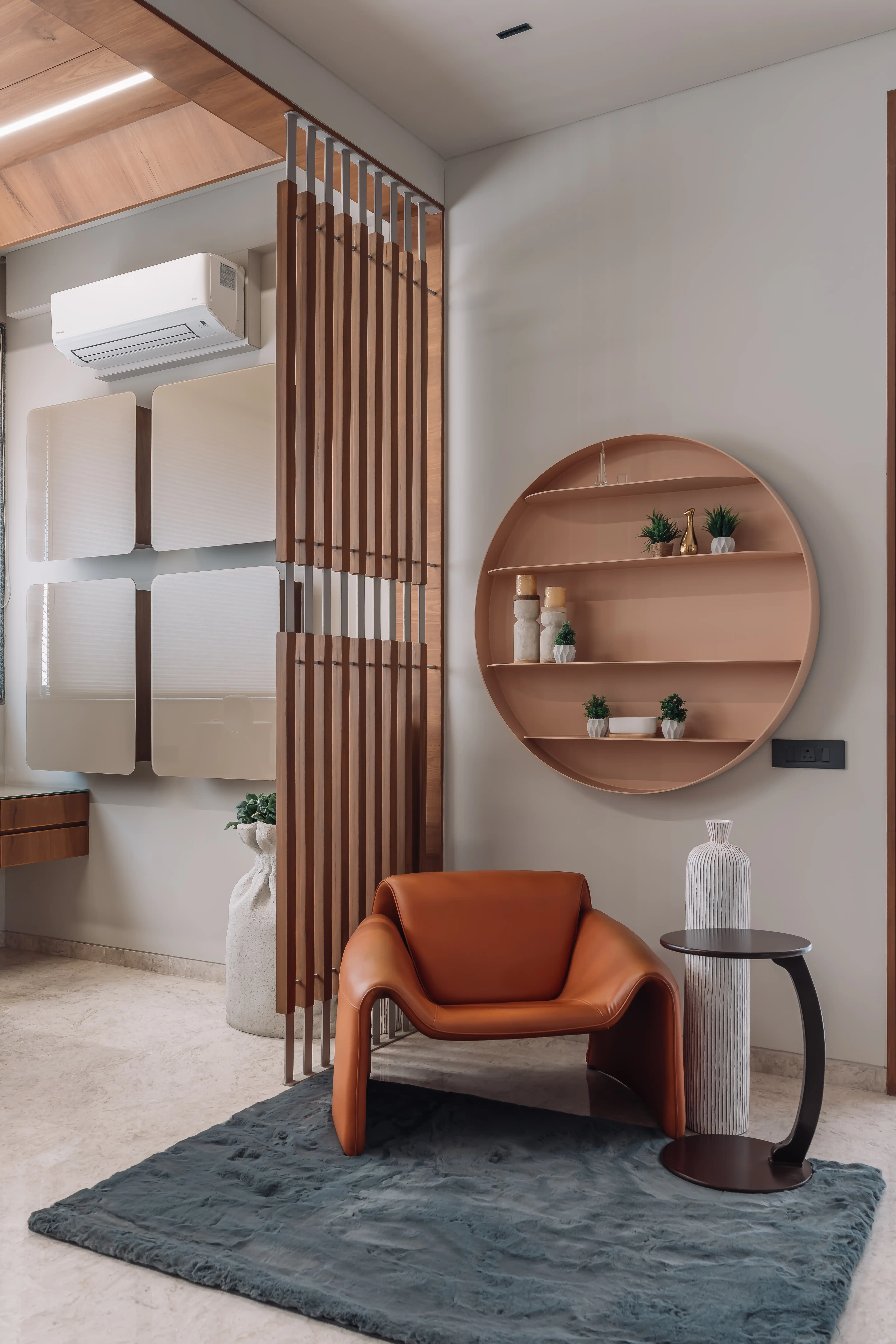
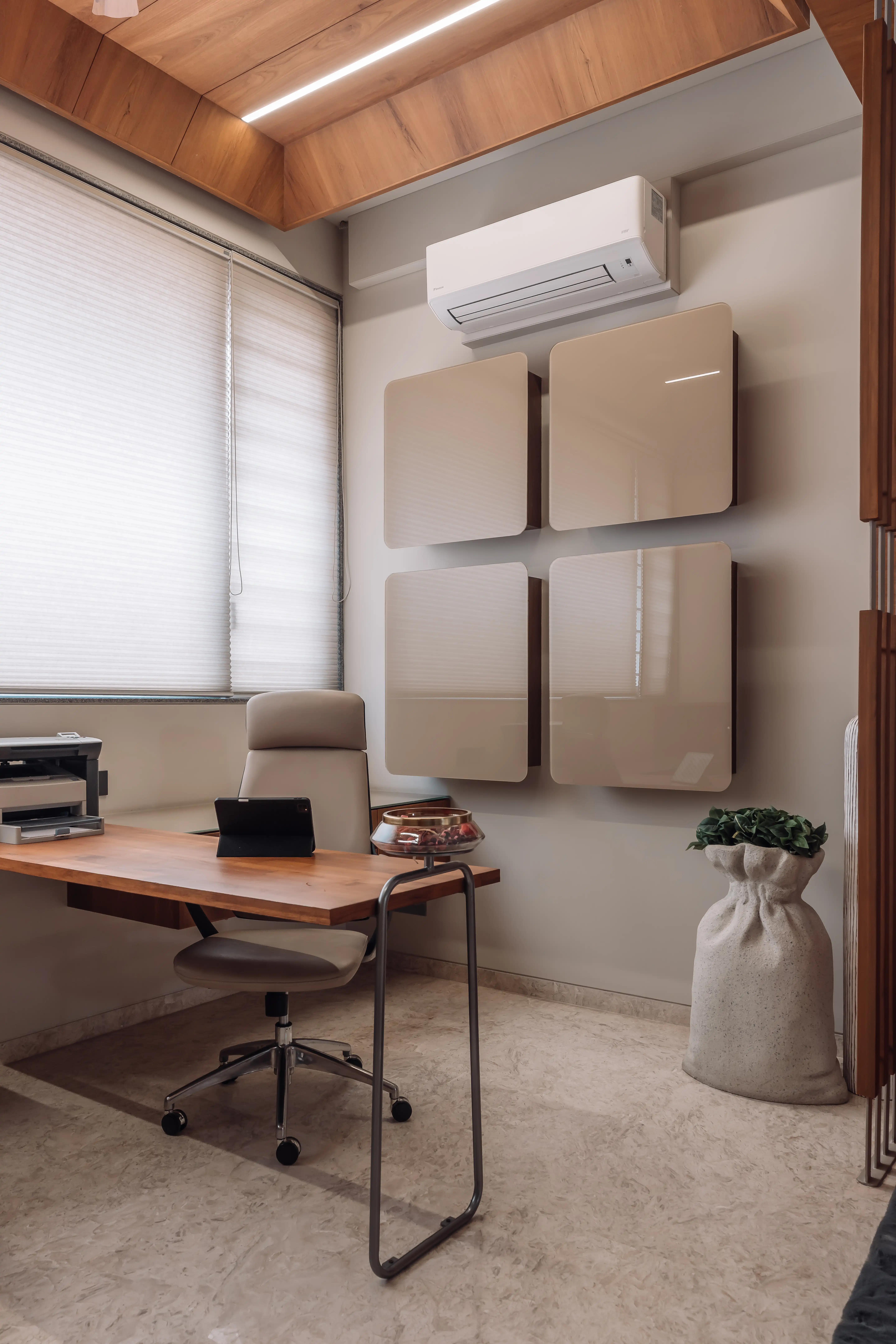
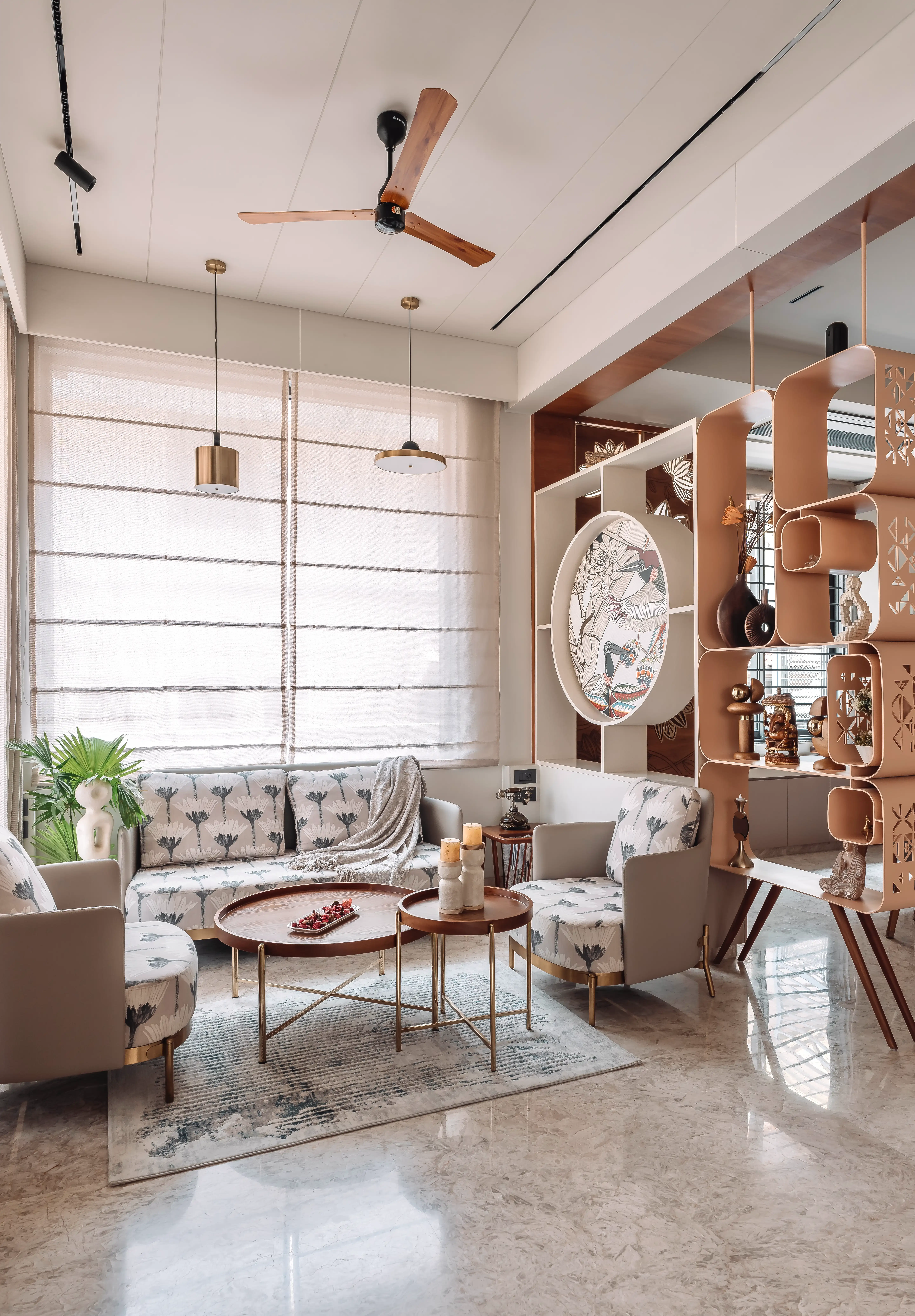
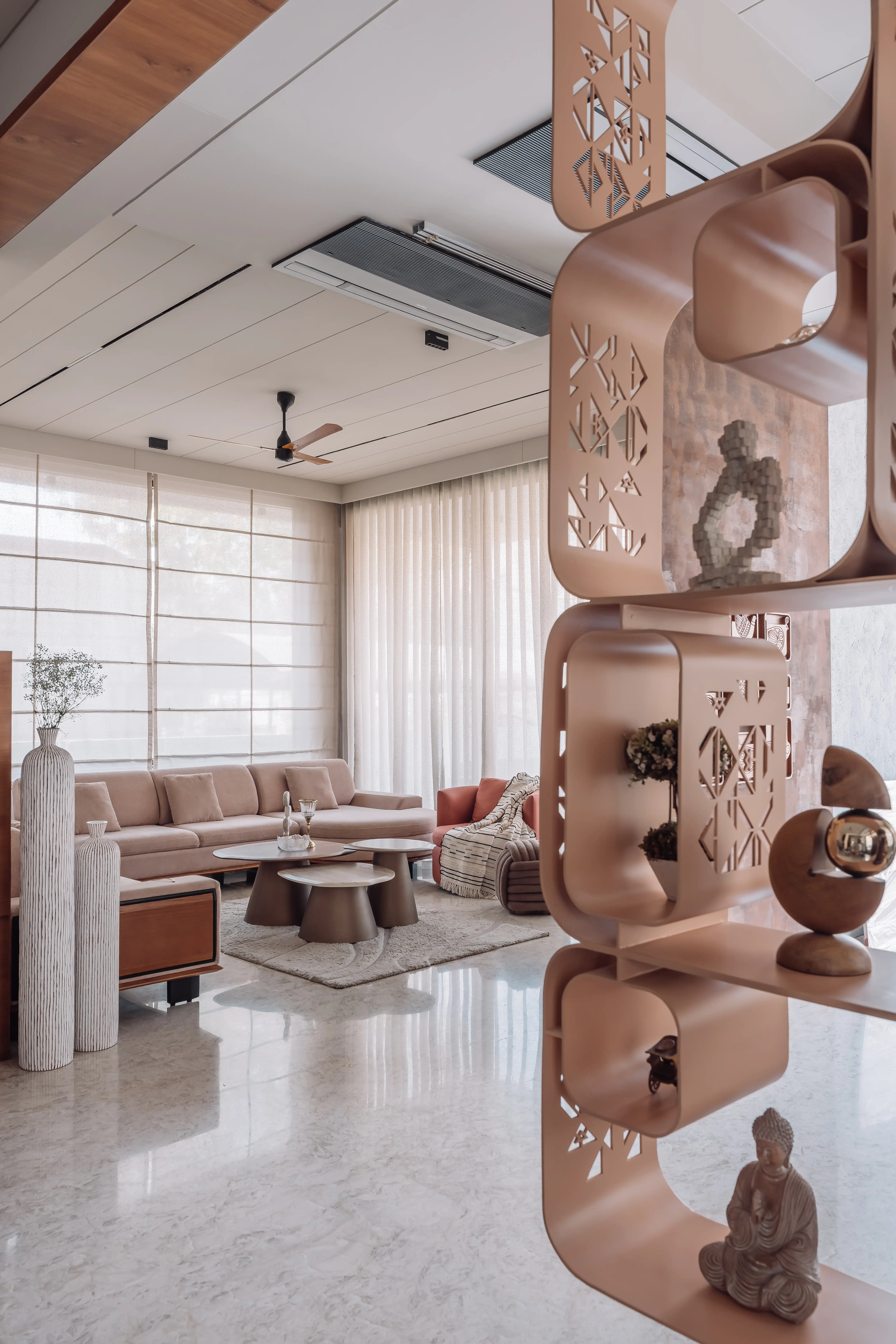
A shared office lounge is positioned within the common area and defined through a wood-and-metal jaali partition and a circular metal shelving unit, subtly separating it from the rest of the house while maintaining visual continuity.
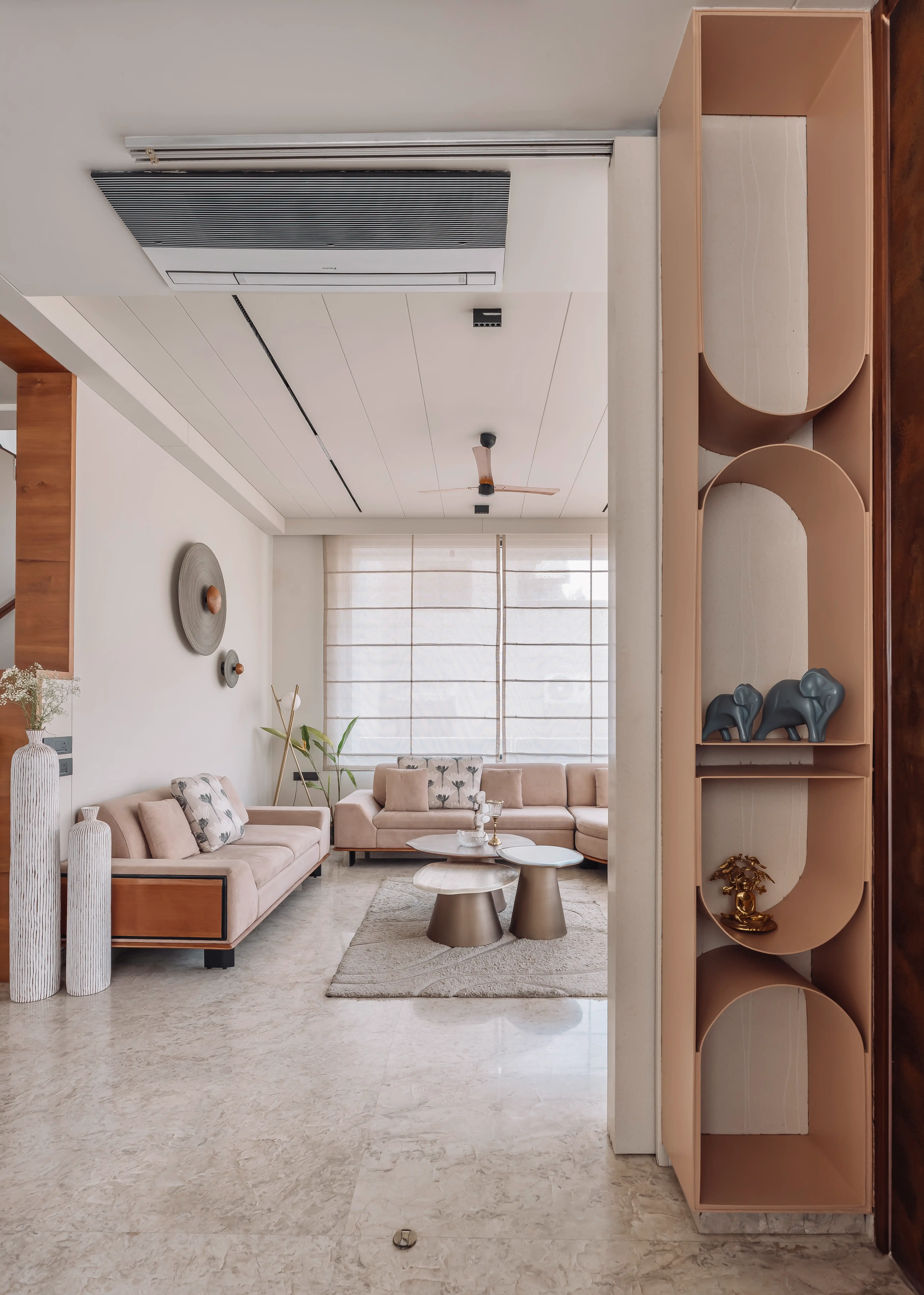
The drawing and living rooms are connected through a Corian solid-surface partition featuring a concealed rotatable television unit, allowing the two spaces to function either independently or together depending on the occasion.
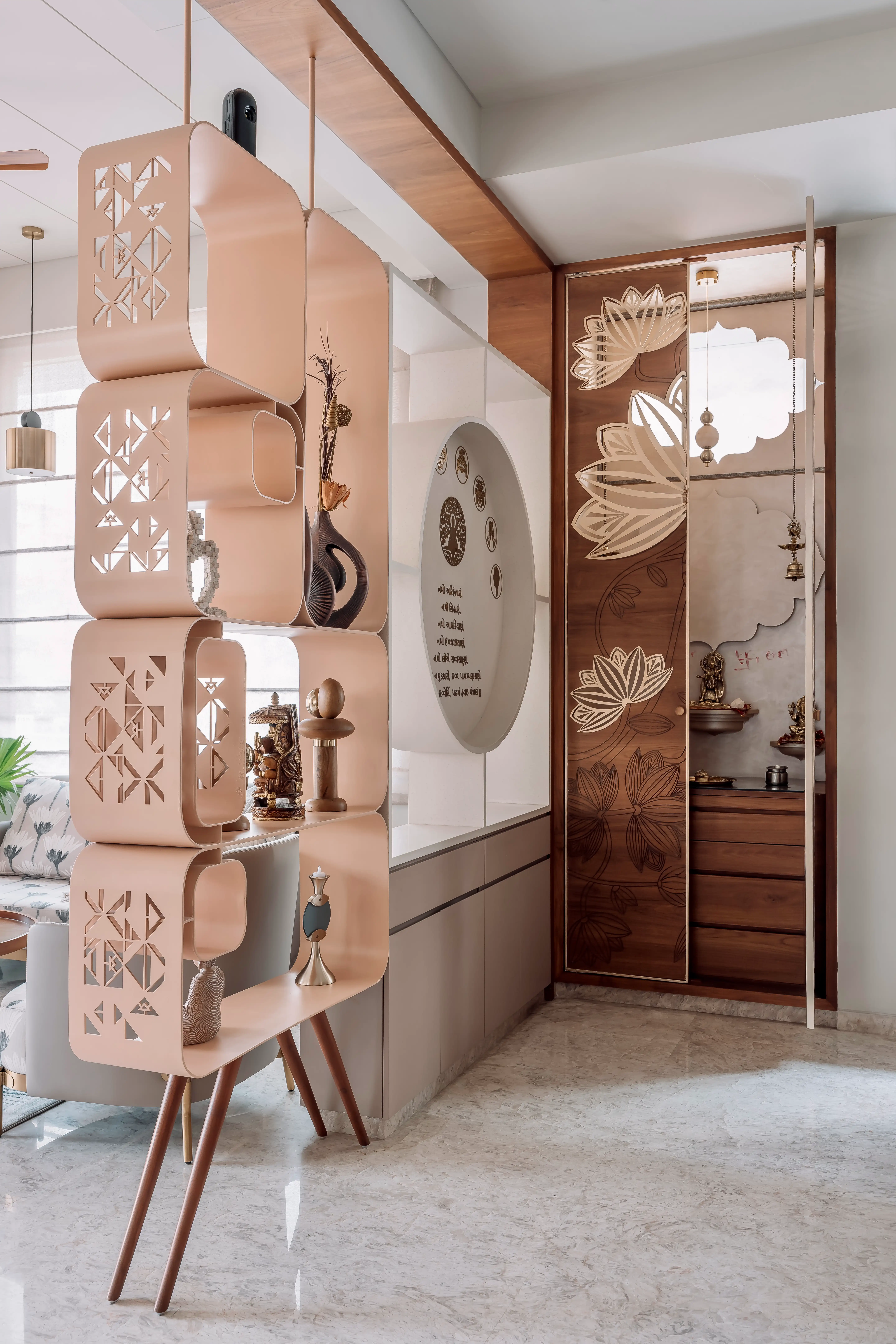
The dining area acts as the spiritual and social core of the house. A temple designed with a carved metal motif panel embedded within a wooden jaali becomes the focal point of the space. The intricate motifs used in the temple are echoed in the flooring inlays of the veranda and terrace, creating continuity across the project.
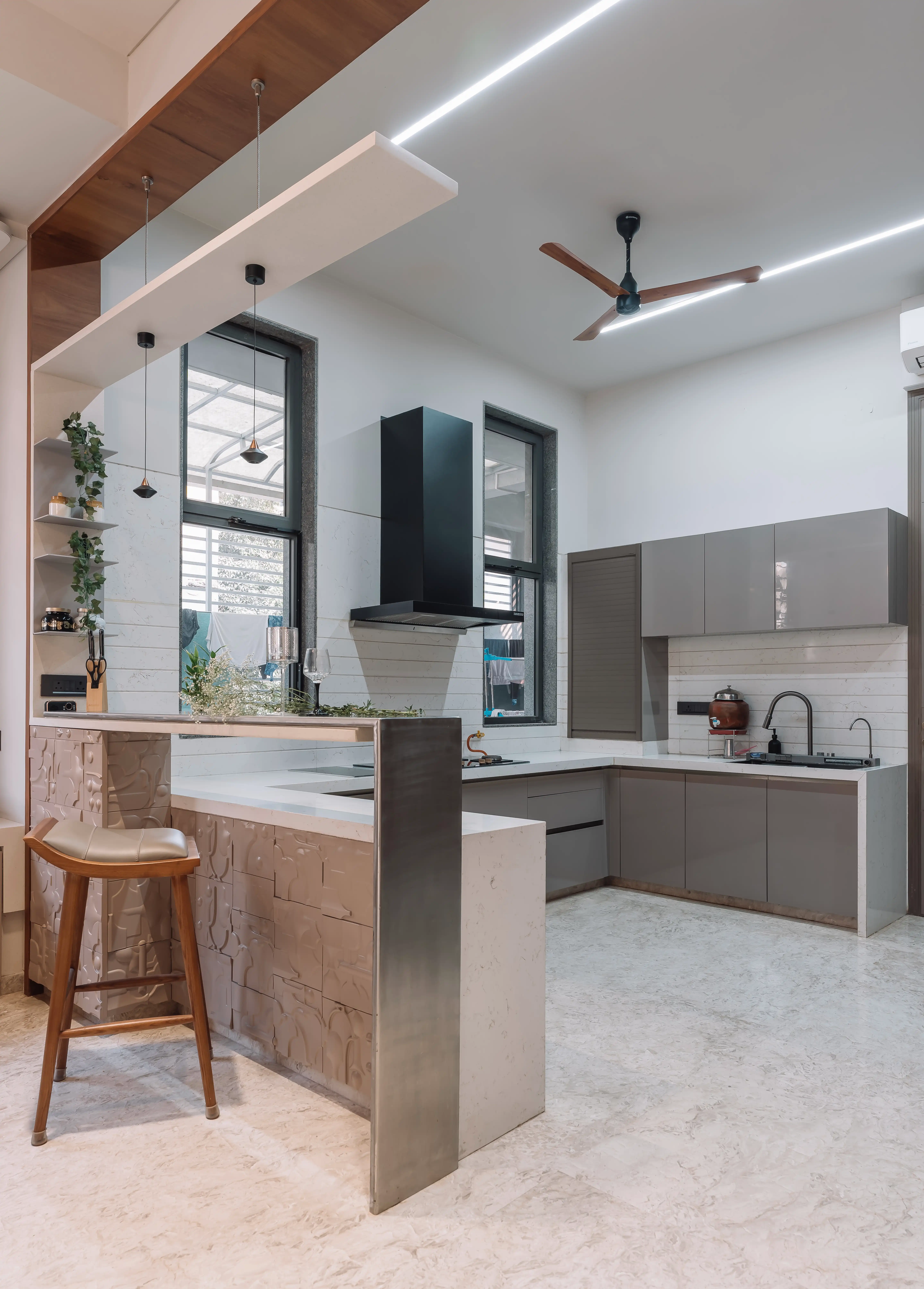
Functional elements within the dining space—such as doors leading to the lift, common toilet, and bedrooms—are visually integrated through seamless Corian paneling. Service elements, including electrical panels, Wi-Fi systems, and security displays, are carefully concealed within the interior surfaces to maintain visual clarity.
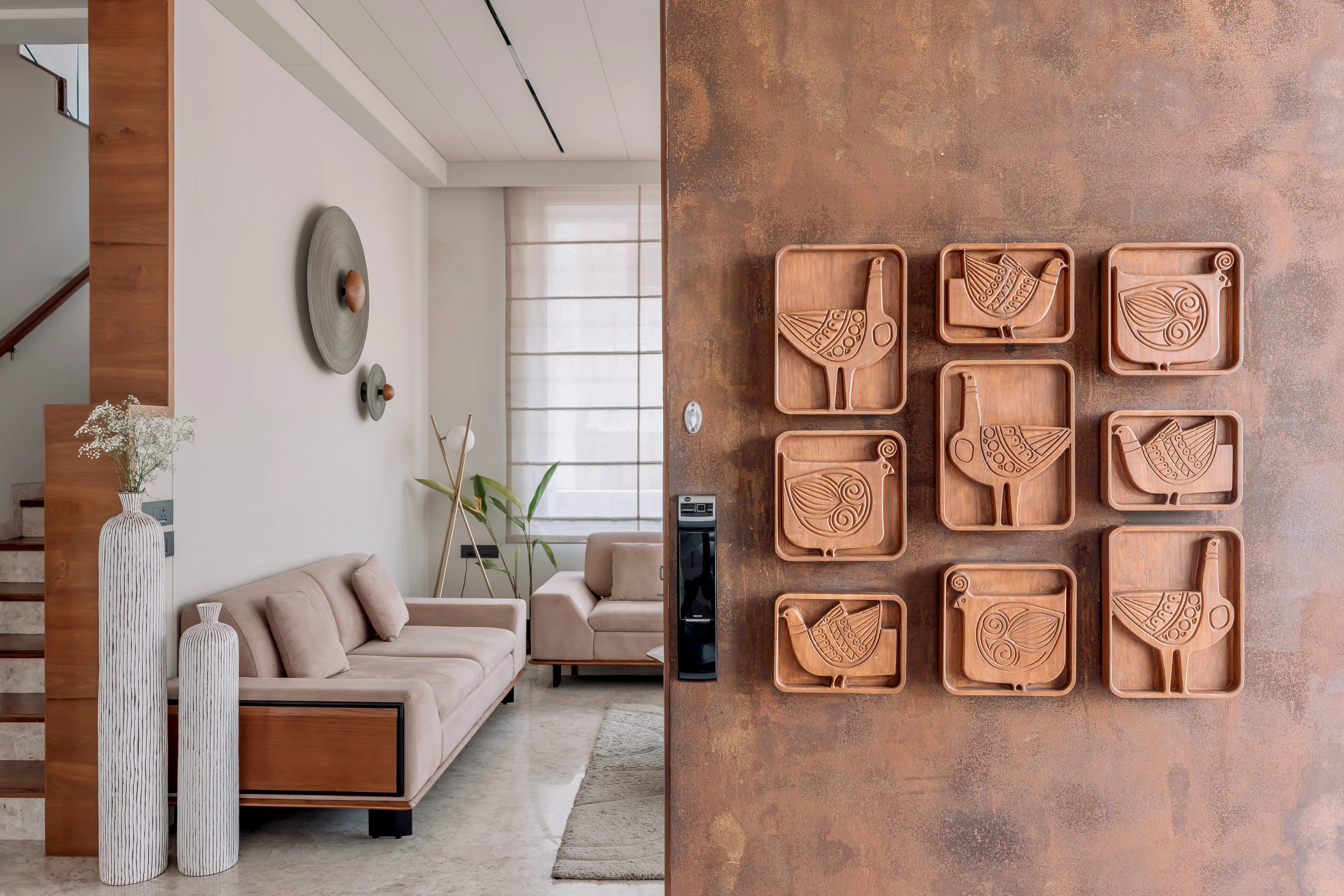
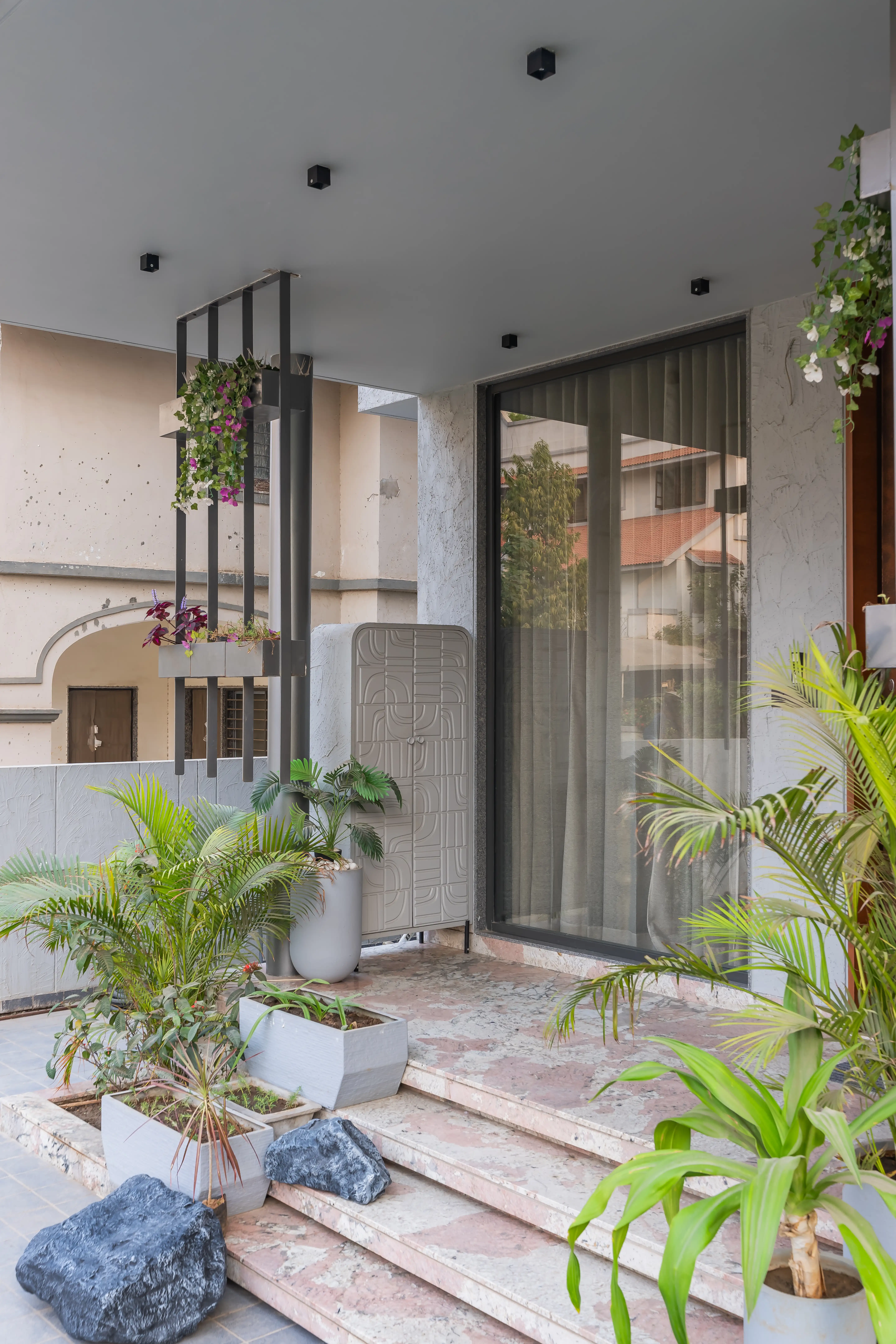
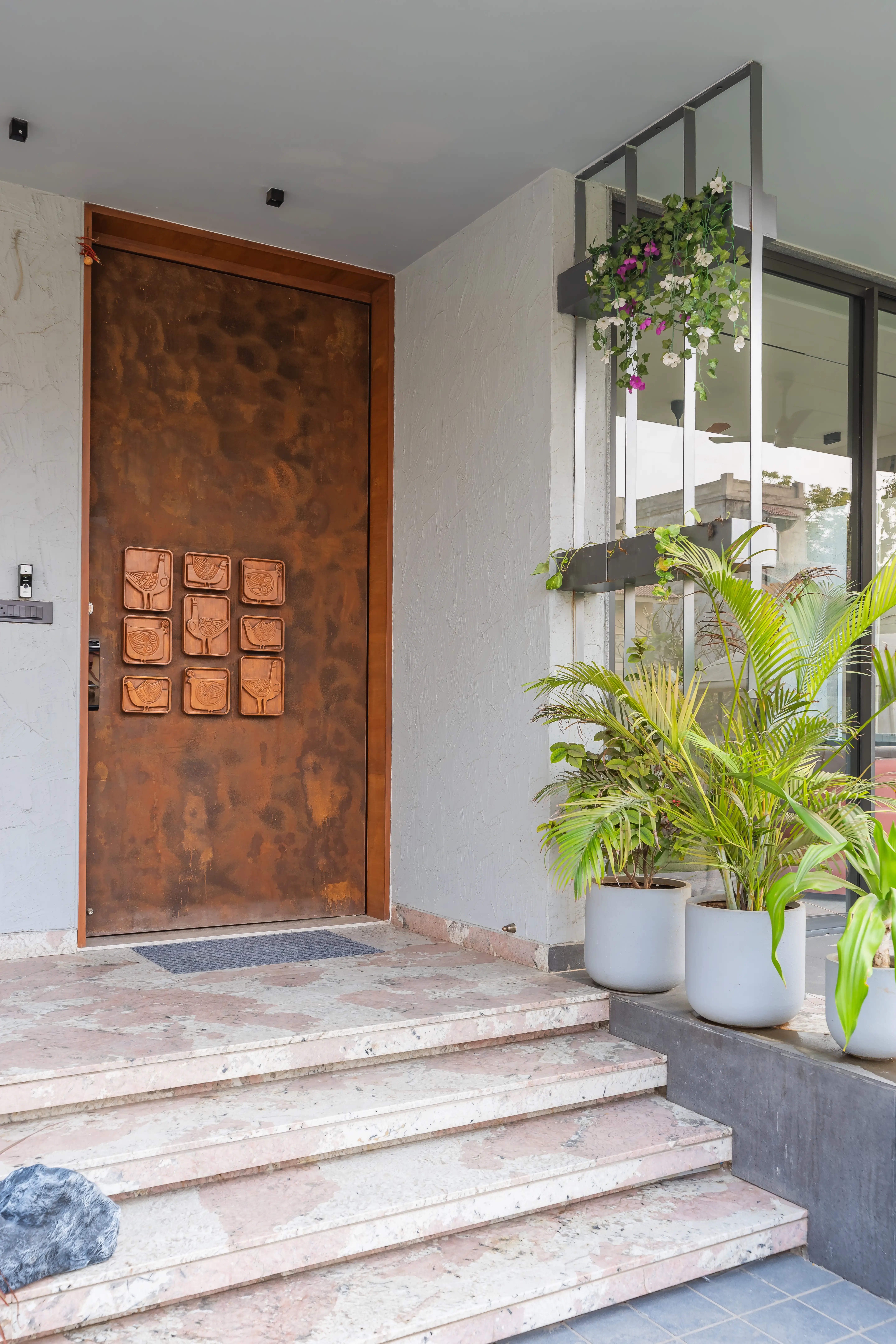
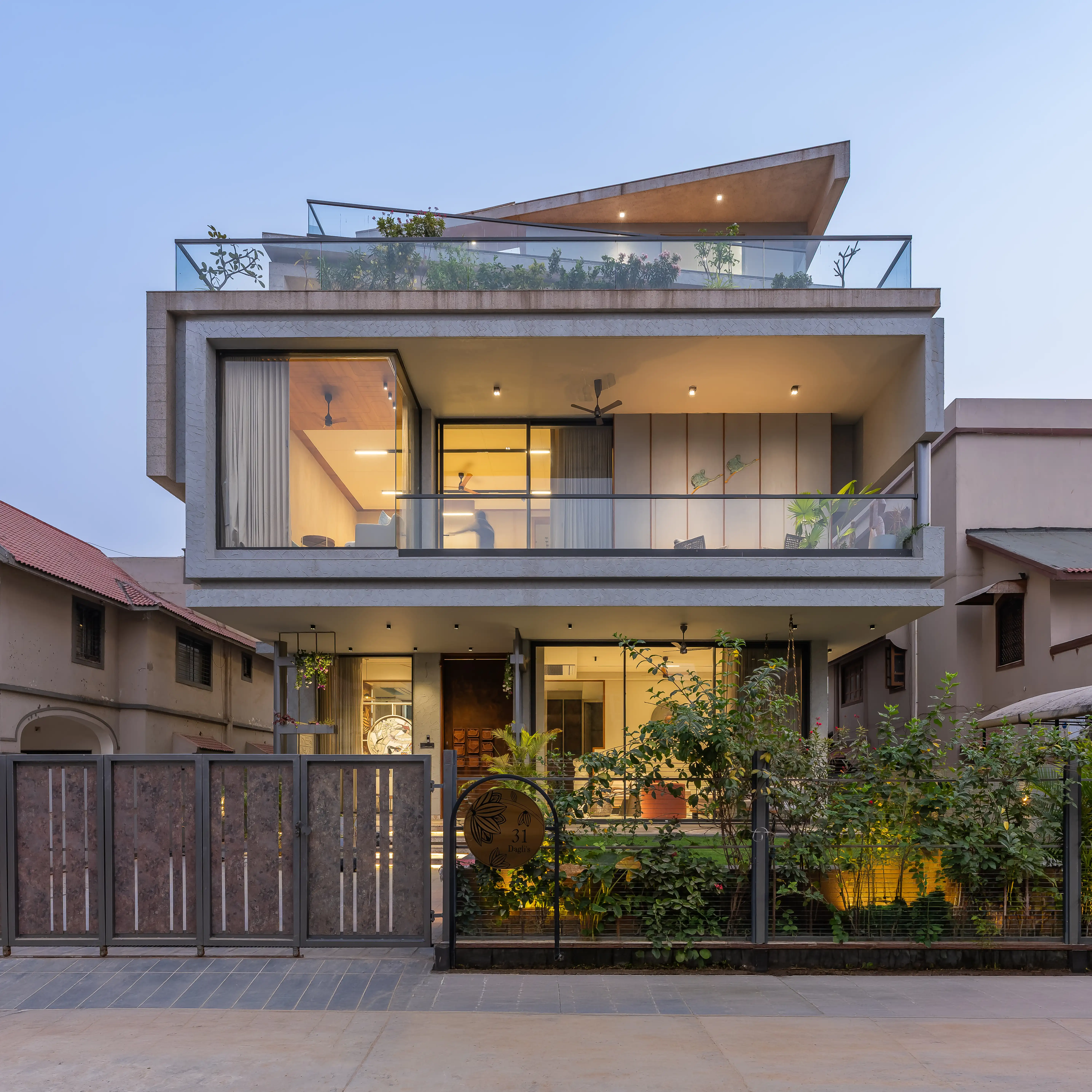
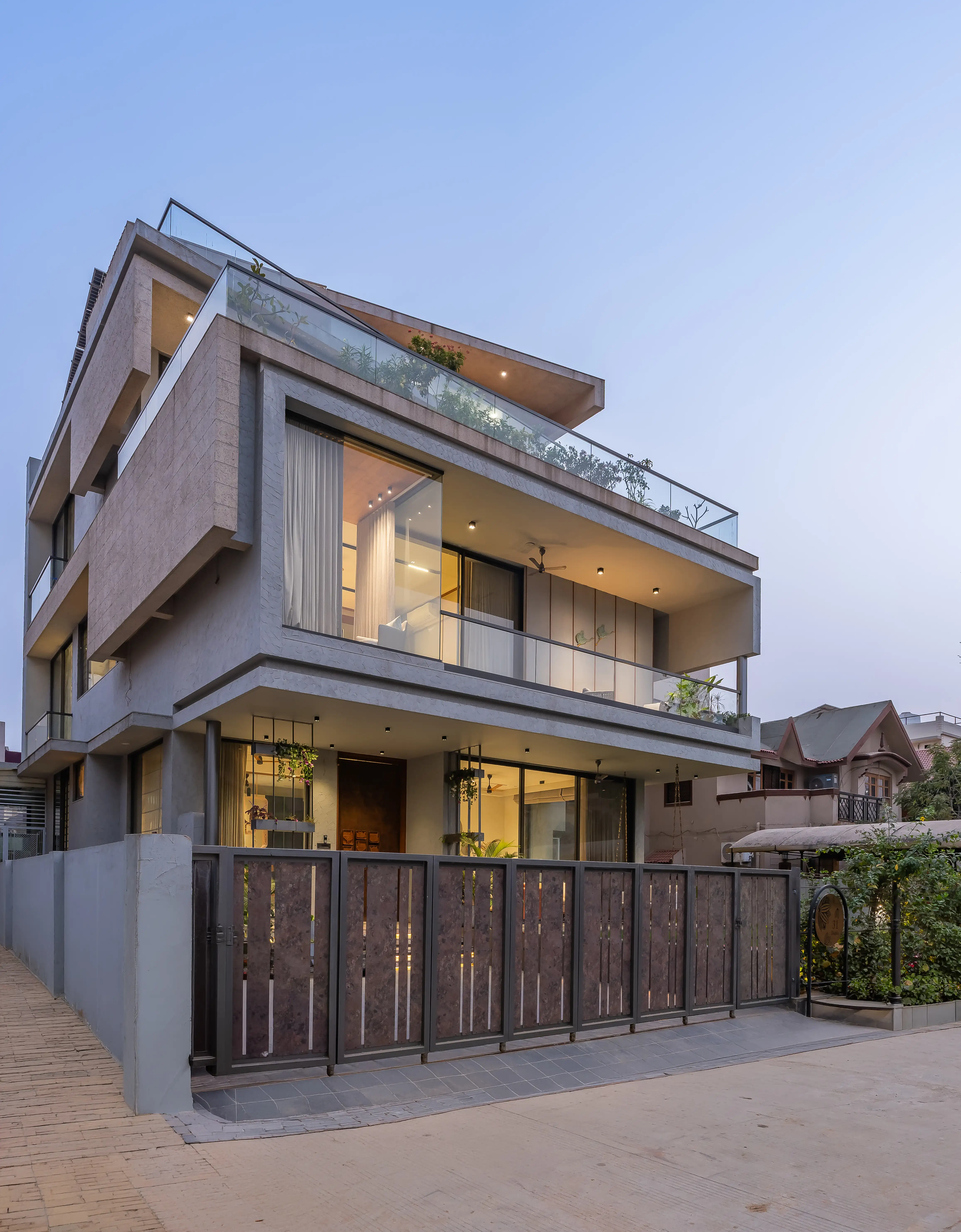
The entrance sequence is designed as a ceremonial experience. Visitors ascend floating steps finished in pink marble with natural boulders placed between them, leading to a rusted liquid-metal entrance door. The door handle is conceived as a sculptural mural element, making the entrance itself an architectural statement. Suspended metal planters soften the vertical scale of the entrance while introducing a landscape layer.
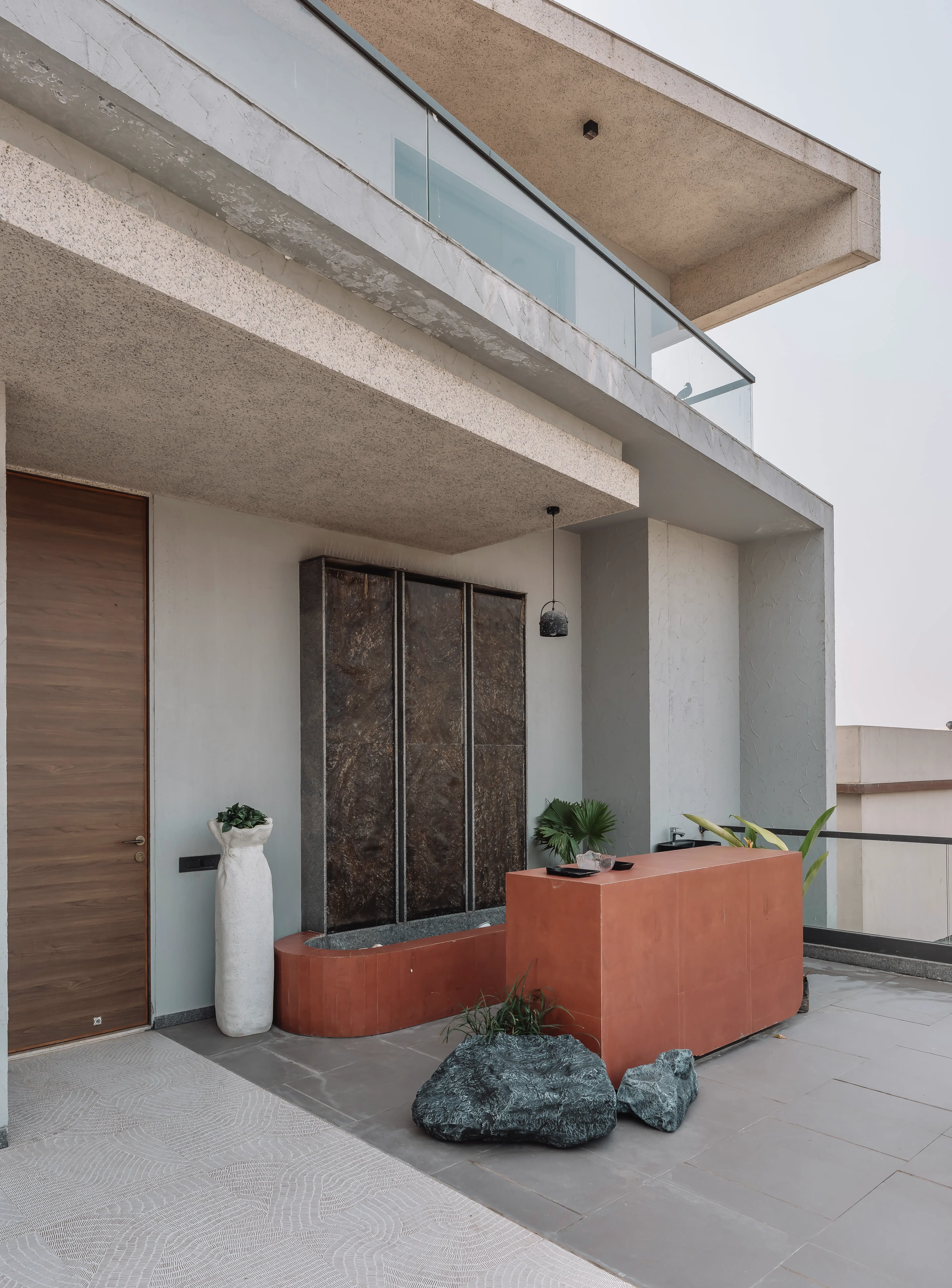
The terrace reflects the family’s love for hosting gatherings. A waterfall feature creates a calming acoustic backdrop, accompanied by soft lighting and a swing placed beneath a Champa tree. A raised platform finished in red tiles with surrounding planters provides a flexible space for hosting guests and family celebrations.
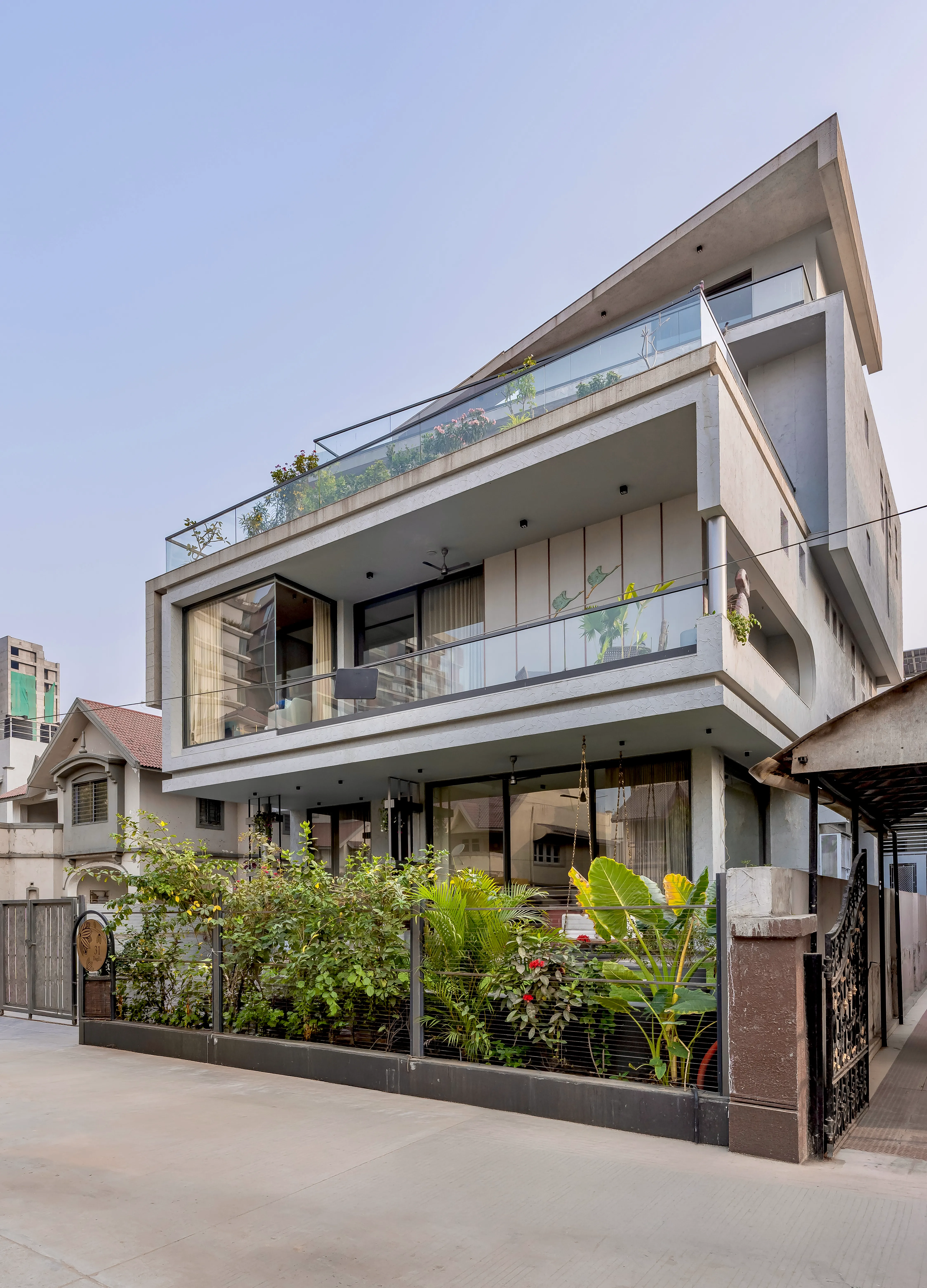
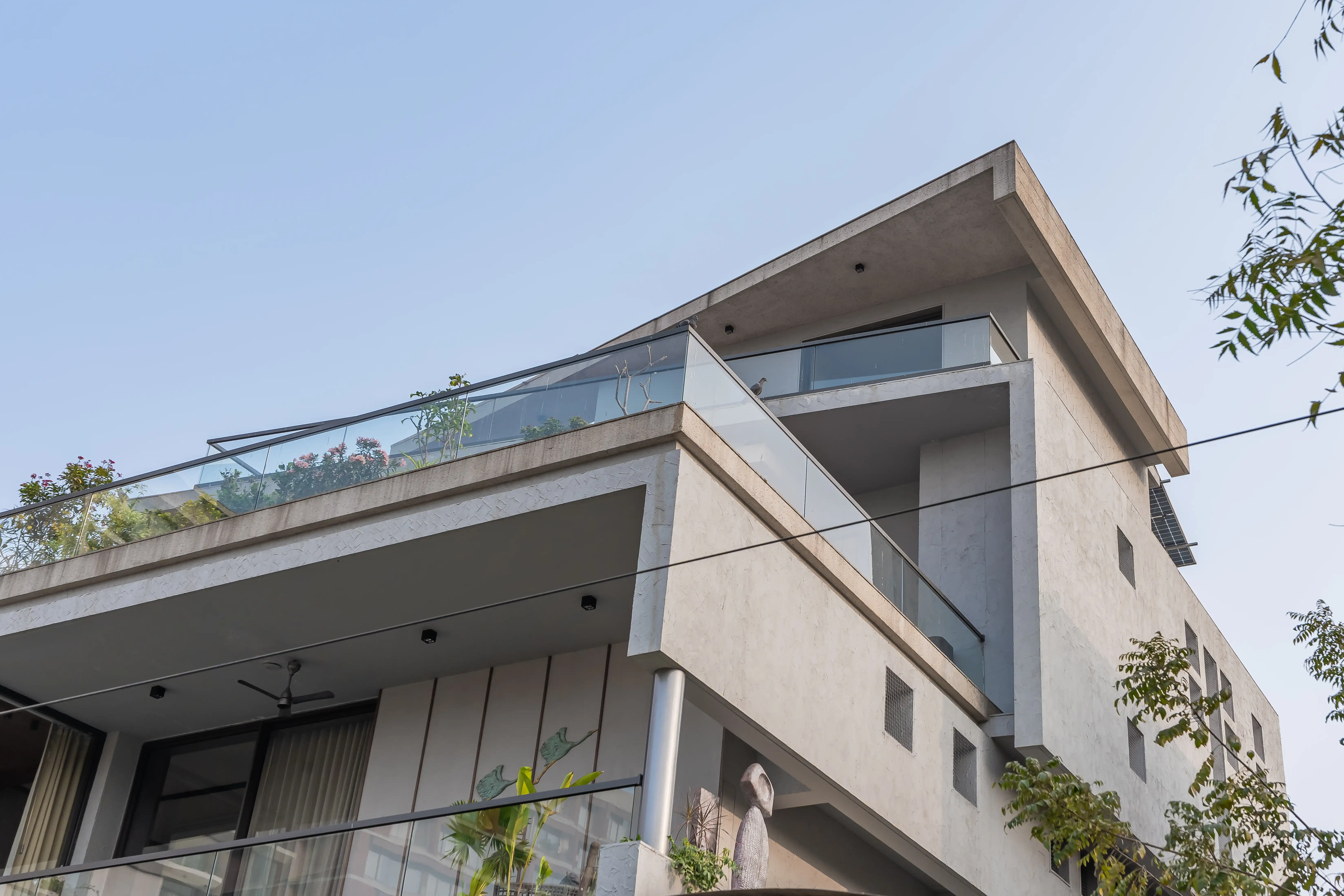
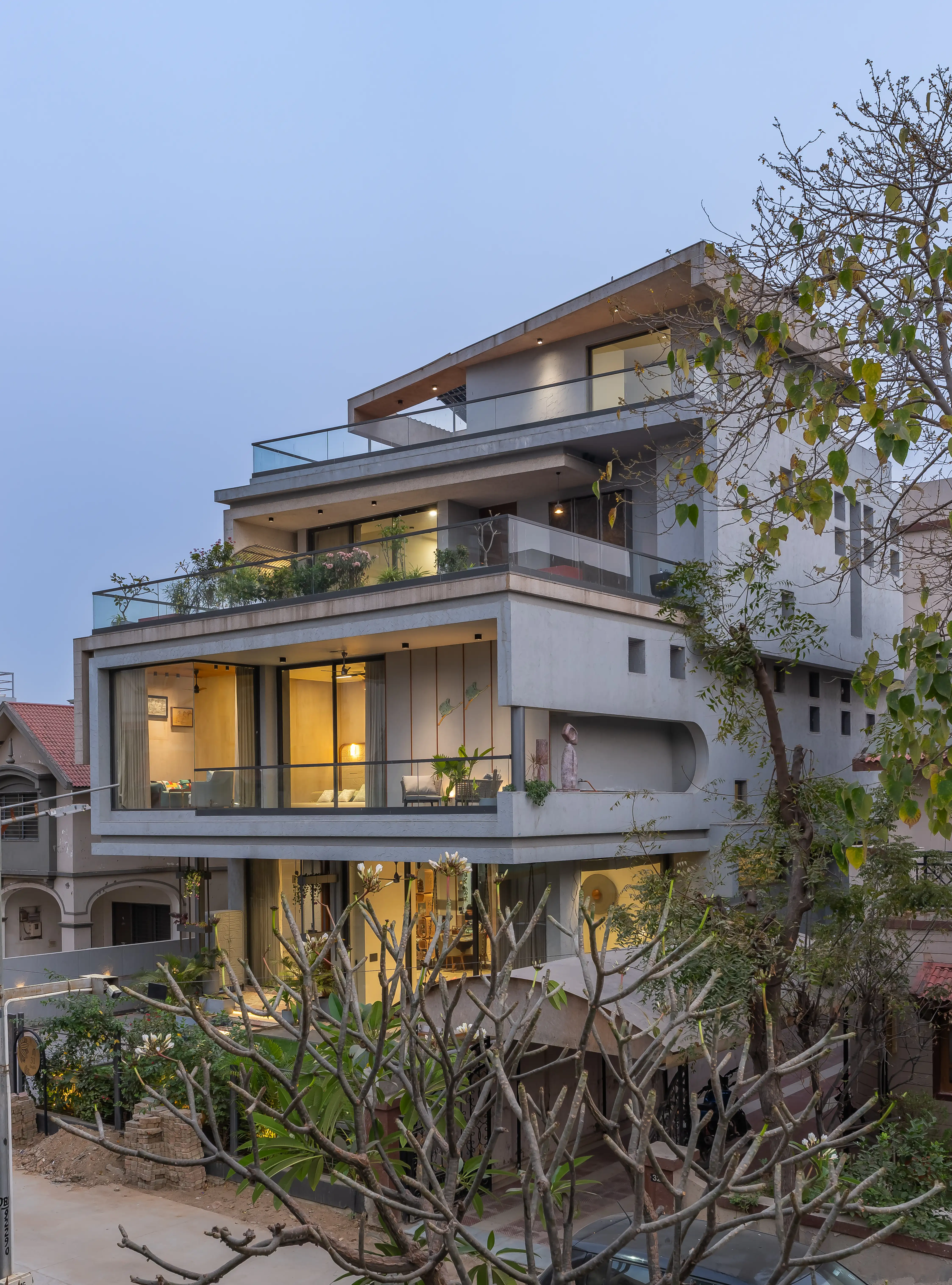
The façade of the house evolved through multiple iterations and design explorations to balance solar orientation with visual identity. The south façade is constructed as a cavity wall punctured with small openings to bring filtered light into service spaces such as dressing rooms, staircases, and toilets. In contrast, the north and east façades incorporate larger fenestrations that maximize natural light and ventilation in the living areas.
These strategies result in a layered façade composed of varied textures and recessed planes. Staggered and inclined slab elements visually reduce the perceived height of the building while creating a dynamic form visible from the street. The west façade introduces a subtle intervention within the otherwise flat surface through a carved geometric recess. This niche accommodates a sculptural element integrated with the plantation, allowing the artwork to merge naturally with greenery. The composition also becomes part of the balcony view, adding depth and visual interest to the elevation.
The site boundary is intentionally kept light through wired fencing combined with dense plantation, maintaining openness while ensuring privacy. The nameplate integrates the same motif language used throughout the house, engraved on a brass plate that subtly introduces the design narrative to passersby.
Ultimately, the house is an outcome of a collaborative journey between the architect and client. The project reflects a home where passion, affection, and thoughtful detailing come together to create spaces that respond equally to functionality, climate, and the emotional aspirations of its inhabitants.
